Fiona J.R. Titchenell's Official Homepage
  • Confessions of the One and Only Fiona J.R. Titchenell (That I Know of)
  • About
  • Novels
  • Short Stories
  • Events
  • Review Archive
  • Review Policy
  • Links

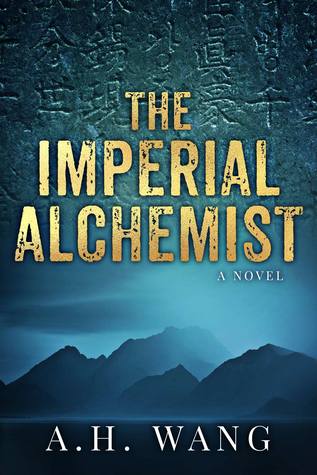
Book Review: The Imperial Alchemist

3/2/2019

0 Comments

 
Picture

Book Review
 
The Imperial Alchemist
 
By A.H. Wang
 
BW Press, 2018
 
Grade: B+

 
The Basics:
 
Thousands of years ago, Emperor Qin of China sent out an expedition in search of the elixir of life. Now, professor of archaeology Dr. Georgia Lee has been given the opportunity to pick up where that lost expedition left off. By tracing the clues across East Asia, she hopes to make a few new discoveries about a world-shaping period of Chinese history and perhaps secure the funding to save her research department, but before long, she finds herself chasing the secrets of her own past and of human mortality itself.
 
The Downside:
 
Although certainly not an outlier in the thriller genre, I’d describe The Imperial Alchemist as plot-driven to a mild fault. The prose is utilitarian, invisible except for the occasional peculiar word choice (I’m not sure I was supposed to laugh when a character being imprisoned, drugged, and interrogated in a remote basement lair described her mood as “hangry”), and much of the characterization feels paint-by-numbers. Grandmothers are doting and traditional, couples with dead children can’t bear the sight of each other, power-hungry tycoons have abusive alcoholic daddies, and gay administrative assistants say “fabulous” a lot.
 
The Upside:
 
The archetypal characterization does not extend to Georgia’s gender. She’s an archaeologist, she’s the hero of a globetrotting mystery adventure, and she happens to be a woman. That’s  pretty much that.
 
And as a globetrotting mystery adventure, The Imperial Alchemist is not only fast-paced but wonderfully flavorful. Throughout Georgia’s travels, the local history and mythology act more as her costars than her backdrop, vividly interweaving with each other and with the story, allowing the reader to experience not only her sightseeing opportunities but her blurring perception of reality and fantasy.
 
Wang’s knowledge and passion for research are on prominent display from beginning to end, adding depth to the world without ever bogging down the story. The doses of reality aren't all pretty travel ads and grade school history crafts, either. Some of the glimpses of the past are gut-turning in a completely different way from the expected car chases and shootouts of a race for the elixir of life, and the truth of what happened millennia ago remains as complicated and subjective as a current events debate in any living time and place.
 
Fans of James Rollins and anyone who loves Lara Croft but wishes she were a better archaeologist should definitely check this one out.


 Want more Fiona J.R. Titchenell? Subscribe here for personalized updates on new books, discounts, giveaways, and more. You can also join me on Facebook and Twitter, or (best of all) become a patron to gain access to exclusive extras!
0 Comments

Book Review: Medieval Underpants and Other Blunders

5/30/2018

0 Comments

 
Picture

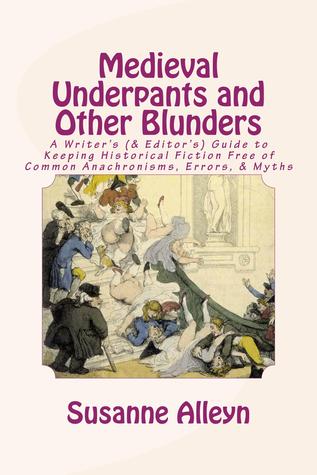
Book Review:
 
Medieval Underpants and Other Blunders: A Writer's (and Editor’s) Guide to Keeping Historical Fiction Free of Common Anachronisms, Errors, and Myths
 
Susanne Alleyn
 
2012, Spyderwort Press
 
B-
 
The Basics:
 
A guide to common historical errors made and perpetuated by fiction writers, and how to avoid them.
 
The Downside:
 
One gets the clear and early impression that Alleyn has read How Not to Write a Novel (as should everyone, incidentally — it’s a useful and hilarious guide to fiction writing in general), and thought, “Hey, I’ll bet I can be even snarkier than that!”
 
Unfortunately, that snark does not come accompanied by all of Mittelmark & Newman’s wit or knack for helpful analysis. Instead of laugh-out-loud, over-the-top caricatures of a systematic list of general errors, followed by discussion on exactly what's going on and what could be done better, we get repetitive ramblings, calling out specific authors (often by name) for the very specific errors they’ve made that particularly annoyed Alleyn, usually related to the French Revolution.

There are many points when the whole book feels like an excuse to vent these annoyances, in better English but with comparable pomposity and unnecessary meanness to an Internet comments section, cloaked in a line or two of lip service to the cover’s promise of constructive advice. This constructive advice generally boils down to the true but unhelpful “do more research.”
 
The Upside:
 
Underneath the off-putting tone, there is some good general advice to be found here as well, particularly about common areas where errors are made, and therefore good targeted starting points for some of that research. There are sections on things like money, noble titling conventions, the availability of certain goods and technologies throughout time and space, origins of common phrases, and traditions (like permanent graves) that are newer and less ubiquitous than many people think.
 
Other advice — such as choosing time periods you’ll actually enjoy researching, anticipating the different mindsets of people with different experiences from your own, and distrusting the accuracy of movies and historical propaganda penned by the victors — should be fairly obvious to those with some existing background in either writing or history, but are certainly valuable pointers for brand new beginners.
 
For more seasoned writers/historians, the most useful part of this book will likely be the appendix, detailing rich and underutilized sources of historical information.
 
Altogether far from a comprehensive guide for beginners (or anyone else), but worth adding to a large stack of introductory books for a hopeful future historical fiction author.


Agree? Disagree? Comments are always welcome (just keep it civil, folks)!

Want more Fiona J.R. Titchenell? Become a patron to gain access to exclusive extras. Or keep up with my fictional musings by joining me on Facebook, Pinterest, Twitter
, or signing up for email updates in the panel on the right!


0 Comments

Cover Reveal: Perils of Wrath, by Elsie Park

10/20/2017

0 Comments


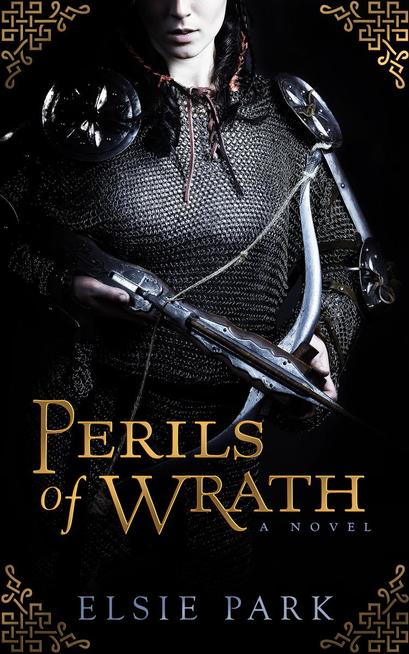
Announcing the newly revealed cover for Elsie Park's Perils of Wrath!

I get to tell people I knew Elsie and her work from way back at Jolly Fish Press, but this one's being released in May by Amberjack Publishing. Way to go, Elsie!

You can check out my review of her previous medieval action-romance, Shadows of Valor, here.

Picture

About Perils of Wrath:


Perils of Wrath, a proper medieval action-romance and sequel to Shadows of Valor, follows the story of the orphan boy, Roland, who is now a gallant knight and pursuing his own quest.

“Nothing frustrates a knight more than being shackled to an unruly female squire with guarded secrets and a persistent sweet tooth.”

Sir Roland's inquiries into a pair of suspicious deaths leads him to Guildon Castle, a foreboding structure near the war-torn Scottish border. His attempt to lie low is waylaid by an assignment from the tyrannical Lord Craven to tame his disobedient stepdaughter, Audrina—by making her Roland's squire! A female apprentice? Unheard of! The rigorous knight training pits Audri's tenacity against Roland's short temper, but is his squire more than what her stepfather portrays her to be? Her guarded nature suggests another side, one with veiled secrets. Can things be more convoluted? Apparently so, as Roland’s hunt for truth unearths horrors from the dungeon and enemy attention. Roland must tread carefully or he, and his squire, will end up as so many others who trespassed on furtive matters.

Picture

About Elsie Park:


​I grew up in a small town outside Yosemite National Park, California, U.S.A. I enjoy soccer, piano, reading, writing, art and my family. Years ago I spent 18 months in Italy teaching the gospel of Jesus Christ. Seeing the castles and old Roman cities enhanced my fascination for ancient and medieval culture. In college I studied zoology, botany and criminal justice. I've worked as a wildland firefighter and a police officer, but I am currently a stay-at-home mom, spending time with my children and husband. I love thinking up new ideas for interesting stories and musical compositions to go with them. To schedule a book signing, appearance, or interview, contact Dayna Anderson at [email protected] or me at [email protected]

Social media:

Blog
Facebook
Twitter


0 Comments

Book Spotlight: Shadows of Valor

3/14/2017

1 Comment


By now, most readers of this blog are probably vaguely aware of the split with Jolly Fish Press, and the process Matt and I have been going through, republishing our books after the rights reversion.

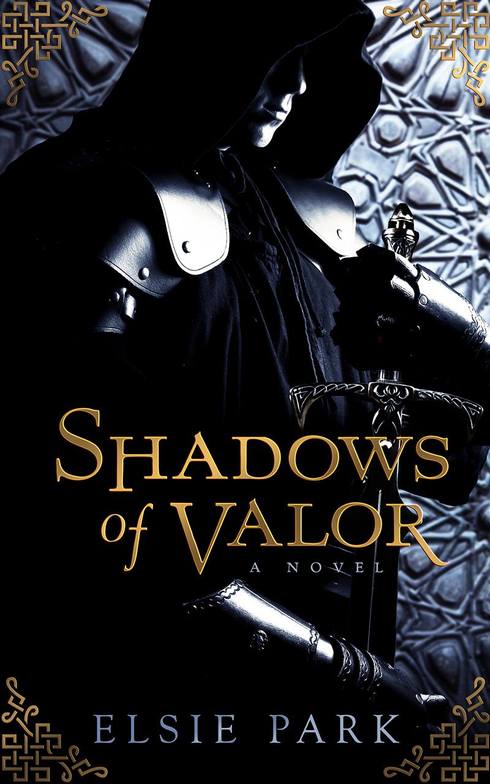
Well, we're not the only ones, and today I'm spotlighting a re-release by Elsie Park. The new edition of her historical romance, Shadows of Valor, releases in ebook form today, and in paperback on the 28th!

And yes, it's got a pretty new cover too :)


Picture

About Shadows of Valor:


Something dark stirs within the peaceful walls of the prosperous town of Graywall, something only the mysterious knight-spy known as The Shadow can overcome. Torn between a sense of justice and a desire for revenge, The Shadow is the nobleman Sir Calan, who must use his skills to assist the Lord of Graywall. When Sir Calan is sent to hunt down smugglers who have run rampant after the levying of a harsh tax by King Edward, he learns of a plot against the just ruler of the town, Lord Shaufton. To thwart this plot, Calan enters a pseudo courtship with Shaufton's daughter under the guise of Sir Calan, even as he wrestles with emotions stirred by the lovely Elsbeth, Lord Shaufton's niece. Elsbeth may be the only person who can heal Calan's troubled soul, but she has secrets of her own. Rife with deceit, greed, and betrayal, Shadow of Valor is a timeless tale of honor, love, and redemption.


(Check out my review here)


Get your copy:

Amazon

Barnes & Noble


Picture

About Elsie Park:


Elsie Park grew up in a small town outside Yosemite National Park, California and now lives in Utah. In college Elsie studied zoology, botany, and criminal justice. She’s worked as a wildland firefighter and a police officer, and loves thinking up new ideas for interesting stories and composing music to go with those stories. Shadows of Valor is first novel, with the sequel, The Perils of Wrath, due for release in 2018.

You can find her on her blog, on Facebook, and on Twitter.


1 Comment

Fi's Five Favorite Fictional Characters (That I Shouldn't Like) #2: Pocahontas (Disney)

2/21/2016

0 Comments

 
Picture

Once again, for February this year, I’m counting down my favorite characters who by all rights shouldn't be favorites, and yet something about them never fails to win me over.
 
Click the links for Favorite Fictional Character (That I Shouldn't Like) #3, #4, and #5.


Next up, we've got one of the beloved Disney princesses of my childhood, but she’s not here for the usual reasons Disney princesses can be difficult to defend.

Why I shouldn't like her:

Mostly because this is an incredibly awkward movie to watch once you're old enough to comprehend things like cultural sensitivity. Disney definitely gained a lot of good intentions between the days of Peter Pan and Pocahontas, but it hadn't quite gathered the competence to back up those good intentions.


Picture
In case you ever wondered, no, there's no such thing as a blue corn moon.

Admittedly, Pocahontas isn't a story you want to strive for complete historical accuracy with, because then it would be about a woman who died of smallpox at the age of about twenty-two, after a brief political overseas marriage, and then became best known for a posthumous rumor started by a much older man about how she was totally infatuated with him back when they possibly crossed paths, when she was ten.
 
At least, we can all hope it was only a rumor.

It's the legend of Pocahontas, the forbidden-love-in-spite-of-the-differences concept, that makes a good movie.

Disney supposedly did its research before realizing exactly how much of the history would be unusable, but somewhere along the way, someone skipped over reasonable solutions like using as much accurate window-dressing that would work in a romantic children's movie as possible, or scrapping the project entirely in favor of something less problematic, and instead the strategy somehow became to include as much randomly generated imitation mysticism as could fit in the script, cloaked in somberly dignified earnestness.


Picture
And plenty of magic leaves not native to North America.

This is the same sin of passing off made up gibberish in a fictional representation of a real-life human culture as last week's example, only exponentially worse, since this one’s connected with, you know, real-life genocide.

Okay, enough depressing reality.

Stripped of any real world context and viewed in a bubble, Pocahontas still has the significant storytelling problem that Pocahontas is always right.

Always. She has an infallible moral compass.


Picture
See, she has it right here.

She never has anything of substance to learn from her romantic foil, only things to teach him. She's already perfect in every possible way.


Picture
How can you even argue with lectures that come with the approval of all the cute animals?

Other characters complain about her unreliability and recklessness, but we're not seriously expected to see those as flaws when said other characters are standing in the way of love and peaceful cooperation. The closest Pocahontas ever gets to imperfection is needing the occasional pep talk from her magic willow tree mentor before making a decision, but even that demonstrates the superior wisdom she derives from her closeness with nature.

Picture
Pictured: A Mary-Sue wrapped in a racial stereotype.

Why I love her anyway:
 
I'm going to date myself pretty dramatically here for a moment. When I was five years old, Pocahontas hit theaters. This was before Mulan, before Princess and the Frog, and way before I processed the concept that movies not made by Disney existed as anything but a curiosity for old people.
 
I missed out on the movie theater window for some reason and had to endure a five-year-old’s eternity of all my friends talking, singing, and dressing up in celebration of the incomparable awesomeness of their new favorite heroine, until the day the big display of VHS copies finally appeared along the back wall of the Blockbuster, so I could find out for myself.

At long last, I put in the tape, pressed play, and had my pink-loving, tiara-wearing mind utterly blown.

Five-year-old me wasn't an analytical fiction blogger. She had never heard the word “feminism.” She hadn't given a whole lot of thought yet to why Snow White and Sleeping Beauty and Cinderella weren't quite as much fun as their younger sisters. She didn't understand the history or present of gender prejudice, no more than she knew about the rules of character development or what happened after the founding of the real life Jamestown. She probably couldn't have told you exactly what it was about Pocahontas that compelled her memorize every word, note, and image of it until she could act it out over and over again with the help of her dolls, and some furniture and couch cushions when she ran out of dolls.

But I am, I do, and I can.

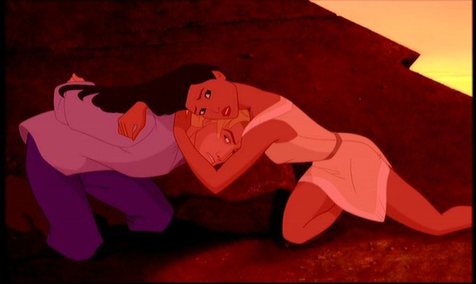
Pocahontas wasn't technically the first Disney princess to rescue a prince; Belle, Ariel, and even Jasmine all sort of beat her to that distinction, but only in passing, token moments in larger action sequences, before or after their princes’ flashier, always more plot-essential rescues of them.
 
Pocahontas was the first Disney princess ever to rescue the prince as the single climactic action of the story.


Picture

She doesn't just get her token heroic moment. Her heroism is the point.

I can explain that now, and I can't overstate the revelation it was at the time or the power she had for me because of it.

Pocahontas is brave and principled and has nature superpowers and doesn’t do what she’s told, but most miraculously of all, she never gets taken down a peg because of it and forced to wait for someone else's pardon and rescue like a good princess.
 
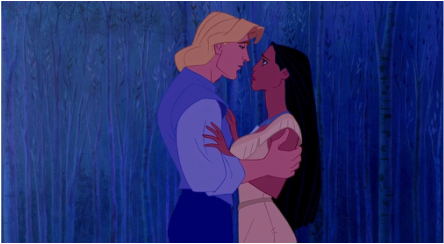
She’s a musical heroine who gets two ballads of her own and a powerful, determined share of the going-to-war montage song, which may be an odd point of appeal, but those songs are one of my forever soft spots, and she wins a guy whose non-saving of her in no way makes him less dreamy.

Sure, she has to give him up to become a diplomatic translator, but he asks her to stay with him, so it counts.


Picture
Talk about dating myself, I remember when Mel Gibson's voice was wholesomely crush-worthy.

Adulthood and the study of storytelling have given me a taste for more complex, less cloyingly perfect protagonists, but that first feeling of discovering a heroine who was completely the hero of her story is something I'll never forget.

One might even theorize that it helped create the F.J.R Titchenell you know today.


Agree? Disagree? Comments are always welcome! Or keep up with my fictional musings by joining me on Facebook, on Twitter, or by signing up for email updates in the panel on the right!
0 Comments

Four More Trips to Prospero, Part 2: Heroes

5/10/2015

0 Comments

 
In honor of the upcoming release of Shards, book 2 of The Prospero Chronicles, we're reaching back into Prospero's twisted past to bring you four more short stories of everyone’s favorite Splinter-infested small town!

(Click here for the first four trips to Prospero)
(Or here for Four More Trips to Prospero, Part 1)

For today's story, we look back to some of Prospero's finest.
Picture

The Prospero Chronicles:
Heroes

By Matt Carter

Roy - 1942

The calendar outside the gas station read, December 8th, 1942.

It had been one year. One year to the day, actually. I remembered it well, President Roosevelt’s voice echoing over the radio, talking about the dastardly, unprovoked attack by the Empire of Japan. Everyone I knew seemed to remember it for his opening line, speaking of December 7th, 1941 being a date that would live in infamy, but the line that stuck with me the most was right at the end.

“Hostilities exist. There is no blinking at the fact that our people, our territory and our interests are in grave danger.”

It was hard to listen to what he, no, what the president had to say and give it no weight, much as my father might have wanted to think it nothing and impress on me the same. Seeing it in the newsreels, remembering the president’s words, I knew only one thing for sure:

I was going to be a hero.

I just wouldn’t be the town’s first hero.

Odds were that honor would go to my best friend, Dwight Matheson.

“You think they got Dr. Pepper in Tunisia?” he asked, popping the cap off his bottle with the gas station’s wall-mounted bottle opener.

“I wouldn’t imagine so, not with the war,” I said.

“Well, shit,” he said. “Guess I should make them count while I can, then.”

He took a long sip, tilted his head back, and belched loudly. He looked around, as embarrassed as I’d ever seen them (which is to say, not very) and seeing only the station’s proprietor on hand, he tipped his uniform hat and said, “Sorry, Mr. Brundle.”

“It’s okay, son. It’s on the house for our town hero!” Harold Brundle said, laughing and reaching into a nearby icebox, tossing two more bottles our way. Dwight missed his, but I was able to catch them both, which with the open bottle already in my hand gave me three bottles of awful tasting soda that I’d probably wind up drinking all of on the walk home because, well, any soda’s better than no soda.

“Thanks!” Dwight waved to Harold as we walked off. He hadn’t gotten tired of being called a hero yet. Sure, no fewer than thirty-eight young (and perhaps not so young) men from Prospero had enlisted and were either going off or had already gone off to war, but everyone called Dwight the hero because he looked the part. Handsome, tall and muscular in a way that made him look real smart in his uniform (even with a coat covering up much of it) with jet-black hair, pale blue eyes, and a chin that looked like it belonged on a movie star, or some ancient statue. If I didn’t like him so much, I’d have hated him.

But I did, so I didn’t. Not that he lacked flaws.

“You need better taste in soda,” I said.

“And you need to stop giving shit to the town hero,” he said dramatically.

“Do you even know where Tunisia is?” I asked.

He shrugged, “I’ll write you an answer when I get there. All I know is there’s Nazi’s there just asking me to put a few hundred bullets in ‘em. I mean, I’d have preferred it be the Japs, but leave that for the marines. Just means I’ll be sending people home Lugers instead of swords. You wanna be on my Luger list?”

“No,” I said, eyes cast at the ground.

“You don’t want a Luger? Okay, fine, if you don’t want yourself a gun you don’t need a gun, how about a good Nazi flag? Or a knife? Everybody loves knives…” he said.

The next part was hard to say, one I’d been building up to for a long time but wasn’t sure I’d be able to say to anyone. Dwight was about as safe as anyone to test the words on. I just hoped he wouldn’t laugh too loudly at me.

“I do want a Luger,” I said. “I just think… I think I’d like to get one myself.”

“What, like from the back of a comic book?” Dwight asked.

“No. I want to enlist,” I said. There, I said it. I braced for the laughter that was sure to come.

No, the laughter that ought to come, the laughter that the very idea of Roy Potts going to war was meant to bring on. Skinny, short Roy Potts who had glasses and a bum knee and was still pretty good at running, mostly because he’d spent a lot of his life running away.

Everyone knew Roy Potts couldn’t be a hero.

Well, almost everyone.

Dwight broke into a wide smile, a real smile I was one of the lucky few to know, not the one he used to get under girls’ skirts. He clapped me on the back, hard, nearly sending me off my feet.

“It’s about damn time!” he exclaimed. I couldn’t have hoped for a better answer, not with what my father was sure to say on the topic.

“You really think so?”

“Hell yeah! You and me on the front lines, can you see it? Shootin’ bad guys, skinning krauts!”

“Skinning?”

“Well, whatever you do, I mean they themselves are a part of an evil army bent on taking over the world, why not treat them as cruelly as they deserve?” he said.

“You’re a true humanist,” I said.

“Mayhaps I am, mayhaps I’m not, but who cares? You and me, Prospero’s finest sons, fighting together and dying together…”

“I’d rather not do the dying together part,” I said.

“Me neither, I mean, I plan on living forever, but if the situation requires and we find the need to fight and die for something bigger than us, at least we’ll die true American heroes,” he said.

I wasn’t sure we needed to die to be heroes. Superman never died, and he was a hero. I’d always thought that being a hero meant doing something great when nobody expected you to, and since nobody had ever expected much from me, it didn’t seem like it would be all that difficult, especially with such a righteous cause providing ample opportunity for someone with a form as pitiful as mine.

I smiled, trying to get him to think more positively, “Naw, you can’t even think of dying. I mean, your folks-”

“They’d be proud,” he interjected.

“-and Trudy?”

He almost dropped his bottle at the mention of her name, his smile almost gone. Very unlike him when talking about the most recent girl he called his greatest conquest.

“What?” I asked.

“It’s nothing,” he said, pulling the collar of his coat higher against the cold.

“What?” I asked again.

“I said it’s nothing, just leave it at that, okay?” he said, agitation riding higher in his voice.

My memories of Dwight go back long enough to know that this was one of those moments where he’d need prodding to open up, where he’d get angry, maybe even hostile, but would then be open for discussion and honesty.

“Dwight,” I said, putting my free hand on his arm.

He grabbed me by the lapels of my coat, forcing me to face him and almost lifting me from the ground, our bottles of Dr. Pepper going flying and exploding on the road.

“I SAID-” he roared, then realizing what he was doing, his face showed nothing but shame.

“Christ, I’m sorry,” he said, setting me back down. “I’m sorry. It’s just…”

“It’s just what?” I asked.

“I don’t… I’m not supposed to,” he muttered.

I put my hand on his shoulder, “You’re my best friend, and I like to hope I am yours too.”

“You are,” he said.

“Then trust me. What’s happening between you and Trudy? Did she break up with you?” I asked.

He laughed, an unpleasant, high laugh, “If only it were that easy. She’s… she’s pregnant.”

This wasn’t nearly as shocking as I think he hoped it to be to me. Whenever Dwight and Trudy were together, they took every opportunity to sneak out from under her father’s watchful eye and screw like rabbits. I always told him that if they weren’t careful something like this would happen, and he would just brush me off and say that was something that only happened to poor people and Catholics.

I could have said “I told you so”, but I doubted that would help things at the time.

“When we talked, when she told me… she was crying, but happy crying, and she said she means to keep it, and I… I got angry, I said she was doing this to try to keep me here, and that that wouldn’t work, because I’m a man and I’ve got my duties,” he said.

Now it was my turn to laugh. Trudy Carmichael was a lot of things, but the kind of woman who would let someone say that to her was not one of them.

“How hard did she slap you for that?” I asked.

“Not as hard as I wanted to slap her back after,” he said.

“But you didn’t,” I said.

“No. I didn’t,” he said.

“Because…” I said.

“Don’t make me say it,” he said.

“Aww, come on, that’s half the fun,” I taunted.

“I didn’t because I love her. There, you happy?” he said.

“Quite,” I said. I wasn’t sure if Dwight had ever said those words out loud to anyone who wasn’t his family or in his proximity whenever he was listening to his favorite boxer win on the radio.

“I just, I don’t know. I get this going right now, right here before I’m supposed to go to war, and I don’t know what I’m going to do. I want to be the hero everybody wants me to be, I want to make the town, hell, my country proud, but I don’t know if I can do that with this. If I’m worried about making it home to a wife and kid, what if it makes me make the wrong choices over there?” he said.

“You won’t make the wrong choices,” I said.

“How do you know?” he said.

“Because I know you,” I said. “Because you take every situation seriously. Because I can tell you take her seriously. If you love her like you say-”

“I do.”

“-then you’ll do everything you have to do to make it home to her and your child. It’s true, maybe you’ll stay your hand, maybe you won’t do what everyone thinks would make you a hero, but if you make it home and treat her right, you’ll be a hero to the only people it really matters to,” I finished.

He looked me up and down like I might’ve been an escapee from an asylum, but he didn’t say anything.

“When did you get so smart?” he asked.

“What can I say, I was born this way,” I said.

“No, you were born weird,” he said.

“A man can be smart and weird,” I said, trying to puff out my chest and sound terribly important, even if I didn’t entirely feel like a man yet.

“Maybe a man can be both of those and hero enough for both of us?” he said.

“Maybe he can,” I said, trying not to think about what had to happen next.

As if reading my mind, Dwight said, “So… have you told your father yet?”

“No,” I admitted.

“You know what he’s going to say, don’t you?” he asked.

“Of course,” I said.

“And what are you going to say when he does?” he asked.

I straightened myself up, trying to look and feel as strong as I wanted to be, “That I’m a man, and that I’m of age, and that he couldn’t stop me if he wanted to, though his blessing would be nice.”

Some of that was even the truth.

Dwight laughed, “Well, let me know how it goes. And, well, if you have to run, you have to run. Don’t let him stop you from following your destiny. Don’t let him keep you from being a hero too.”

I smiled, though his sentiment was easier said than done.


#


It was night by the time I got home.

Father, Mother and my little, thirteen-year-old sister, Ruby, were decorating a Christmas tree that he’d cut down from the forest this morning. It was every bit as lopsided and stunted as most trees from the deeper depths of this forest were, but with some lights and glass ornaments it almost looked respectable.

I tried to bring some of Dwight’s strength and arrogance to my proposal to Father. I made my case as persuasively as I could and vowed that I would stay strong. For his part, Father remained quiet through my entire speech, continuing to help the others with the tree, even allowing me to finish. When I had, he calmly walked over to his favorite chair, put his favorite pipe between his lips and lit it up.

“I am impressed that you have put a lot of thought into this matter, and glad that you decided to ask me before doing anything, because you must know how obvious the answer is, son,” he said.

“But-”

He raised a hand, “You’re still too inexperienced and fragile to go to war, and we would be irresponsible guardians if we just let you go making a mistake like that.”

“He’s right, dear,” Mother said.

“But I, I want…”

“You want to be a hero?” Father asked.

Ruby laughed.

“You don’t think I can be a hero?” I challenged her.

“Anyone can be a hero, I just think that’s a piss-poor reason to want to go to war,” she said.

“Language, dear,” Mother chided, before turning back to me. “Though your sister is right.”

“If she wanted to go, you’d let her,” I challenged Father.

He didn’t argue this, “We would, but only because she is more mature than you and has more common sense, but this is not a world that appreciates someone of her condition and standing and so she would never be allowed to do what she could. You, on the other hand, are still young and foolish. We have put too much work and too much time into raising you and training you to let you die in some foolish border skirmish.”

“Some foolish border skirmish? They think this may be the greatest war in human history! Bigger even than the last!”

Father shook his head, “All wars are some foolish border skirmish, or some silly tiff about an ideology. You may not have been around to remember any, but try actually reading some of those books they gave you in school and you may get a better understanding of the matter.”

“But, this is against evil!”

“Says who?” Father proposed.

“Says-”

“Says propaganda,” Father said, enunciating the last word as if slowing it down would give it ample weight. “While I won’t deny that there are some particularly cruel monsters in this conflict, they are hardly anything new. Monsters, like wars, come and go, and it is up to the rest of us to keep our heads low and enjoy our lives while we have them.”

“So you would let them just waltz all over us? You’d just let them take all of our freedom and everything we’ve fought for?” I ask.

“I didn’t say that. If these villains do indeed prove themselves more capable than those of the past have proven, the necessary authorities will see that they get what is coming to them so that the status quo may be maintained,” Father said.

“Don’t you see, though? Those necessary authorities need all the help they can get, and I can help them! You know I could!”

“You could,” Father admitted. “But you also run every risk of dying. Or worse, you could show-”

“I wouldn’t dare,” I said, cutting him off before he could say the unspeakable.

“You wouldn’t dare, you wouldn’t want to, but until you mature you run that risk of losing focus and doing something regrettable,” he said.

“I won’t lose focus,” I said.

“You’ve lost it before,” he said. He was right, but it had been a long time. I was better now.

“I’m a man. I can handle it,” I said.

“No, you’re a boy with dreams of being a man, like all of us were once upon a time. One day you will be a man, and it is my job to make sure you get there. Until then, I cannot let you engage in such a dangerous folly,” he said, completely dismissive.

My strength began to leave. I tried to imagine Dwight by my side, a brother in arms, what he would say, what he would do. Truth be told, he would never find himself in this situation. If he wanted something, he would take it without caring what anyone else would say.

In this situation, that was impossible. Father was an immovable object, and I was hardly an unstoppable force, not like Dwight would be.

“You’re young still,” Father continued. “And if mankind has proven anything, it’s the tendency for war. Another will come along in your time, once you have matured and gained the necessary perspective that will help keep you from getting killed. Then, maybe we’ll talk about you going on one of these heroic crusades. Now are you going to help your mother and sister with the tree, or are you just going to stand there gawking?”

And like that, the argument was done. No raised voices, no raised passions, just his decision finished and over with and no consideration for what I wanted, no, what I needed.

That was it. Roy Potts would never be a hero with a father like this.

No, if Roy Potts wanted to be a hero, he’d have to take Dwight’s advice.

Run.

Politely, I excused myself and went to my room. Once there, though, I was a man possessed. I grabbed the suitcase from beneath my bed, emptying it of all the junk that had collected in it over time, and started packing it with all the clothes from my dresser I could fit. I emptied the cigar box full of coins and wadded up bills I’d earned doing yardwork for the neighbors this past summer, at least thirty dollars, and put it at the bottom of my case.

Sneaking into Father’s room, I also stole one of his revolvers, as well as a handful of bullets. For protection.

I figured that if I started running now, I could make the road and hitch a ride over to Braiwood or Milton’s Mill. In either of those towns I could pick up a bus to Sacramento, where I could enlist. When I got there I would send a package back home with Father’s gun and a note explaining just why I did what I did, and that I was sorry but that this was my destiny. It was possible I would be disowned, or perhaps he would even hunt me down, but I was certain that if I was just given the chance, if he could just see what I was capable of, that everything would be all right, and I would be accepted for what I knew myself to truly be.

A hero.

I snuck out of my window, pulling my coat tight against the bracing cold, and with my suitcase in hand took off running into the forest.

There were clouds enough I knew it would storm soon. Soon enough to make my walk a nightmare, perhaps, but also enough to cover my trail too, I hoped. Fear gripped my heart; this was something I never would have done before, something I never would have dreamed of, but I had never really dreamed before, had I? Never wanted.

This was my time now, and I would make of it what I wanted.

The forest was dark, but unlike most I held no fear of it. The tales of monsters and strange happenings within these woods didn’t scare me. I’d always found them comforting and peaceful in their own, beautiful way. I would keep to these woods, edge my way around the town until I got to the road, and from there, with a little luck, my destiny would await.

I would be a hero.

I could see the lights of nearby houses, and in their way they called to me. They reminded me of what I had back at home, what I could have if I just turned back and listened to my Father. I hadn’t done anything unforgivable yet, I had just given into an impetuous desire.

I could still fix this.

I could still make things as they were.

The home. The warmth of a fireplace. I could practically smell it…

No, that’s not a fireplace.

There was something wrong. A harsh, bad burning smell in the air. Smoke, but not from leaves in someone’s backyard. The forest seemed to know it too, the normally sleeping birds and rodents clearly sensing that something was amiss not too far away. I looked around, stretching my senses, trying to identify its source.

Then I could hear the faint screams.

Changing course, I ran out of the forest to the homes nearby.

It did not take long to find what I was looking for.

It was a two story house, belching smoke into the night sky. The first floor was nearly consumed in flames. Neighbors stood around, baling on water from buckets and hoses, but it was not doing much good. The fire department was nowhere to be seen, but the way people were running in to town told me that they would not get here soon enough. I did not know which family lived here, but I could see them waving a white sheet out of the second floor window as smoke poured out around them. A woman, two children.

They would not last long.

I wanted to laugh. I should have laughed.

It was just too perfect. I wanted to be a hero. I ran off to be a hero. I ran all the way over here, I followed the screams, and the perfect opportunity to be a hero presented itself.

And it had to be with fire!

Fire, the one thing I’d hated and feared as long as I could remember, the one thing that just brings out that primal, animal side of me that I hate to admit still lives inside of me. Of course my opportunity to be a hero would be a fire.

Their screams became more desperate, and I was the only one who could save them.

I ran around the back of the house and found it shy of onlookers, setting my suitcase down at the base of a backyard swing set and putting my coat and shoes with it so nothing bad would happen to them.

Then, as Father said I would, I lost focus.

My body stretched and deformed, arms splitting in half forming four sets of stunted, clawed hands. My body lengthened and expanded, muscles and extra limbs bursting outward as needed, my legs now powerful and bent back at the knees. I twisted my face into some grotesquely monstrous visage that nobody would rightly believe rescued these people.

Stalking over to the house, I leapt up on to the second floor’s sloped roof and broke in a window.

Flame and smoke exploded around me, my skin feeling as if it were on fire, which, for once, it actually was. The smoke singed my lungs, and to compensate I just cut them off for now.

Getting by without breathing was never easy, but I could keep it up for at least ten minutes.

Ten minutes and I’d be out of here, or dead.

Flames licked at my clothing and skin, burning off the former and peeling the latter. Some of the extra limbs I’d grown for protection had already begun to burn through and slough off.

Run away. Get out. Flee. You’re not a hero. You’ll never be a hero. You just run like you always have, run away back home and do what you knew you were going to do the moment you left that house. Go home to Father and apologize and hopefully let all be forgiven. Be what you’ve always been.

I roared in frustration, destroying a flaming chair in the hallway before me.

I have always been a coward. Now I was a hero.

I tore down the hallway, not minding the flames and trying to grow more skin and bone to keep my body safe. I found the room where the screams came from, a towel stuffed under the doorframe to keep the smoke out. The door kicked in easily under one of my powerful legs.

In addition to the woman and the two young girls, there was a father and a younger boy, clearly passed out from the smoke. Those that could looked at me, confused for a moment, then screamed, scrabbling to get out the window that would just drop them into the flames.

There was no time for this.

I made five tentacles with hooked ends burst from my back, wrapping around each of the five. Dropping down onto all my arms and legs, I bounded back down the flaming hall, the family trailing behind me and out the window. We all landed in the backyard in a heap, but aside from some smoke and burns and a few broken bones from our rough landing, they all looked like they would make it.

Clearing my lungs for speech, I croaked, “Get them to Doctor Fallon.”

As an afterthought, I added, “And forget my face.”

The mother looked like she didn’t know what to make of me, other than a charred monster, but the smallest of the little girls looked up at me and smiled.

“Thank you Mr. Monster,” she said, wiping soot-blackened snot from her nose.

I couldn’t drop the monstrous voice, but I did give something of a horrible, toothy smile and said, “You’re welcome…”

“Lois. Lois Todd!” she piped up, barely affected by seeing me.

“You’re welcome, Lois Todd,” I said, patting her on her head despite her mother trying to hold her back. “Stay as strong as you are today, and there’s no telling where life will take you.”

Trying to look strong for the little girl, I walked back to the swing set and gathered my effects, bounding back off into the woods.

Sure I was out of sight, I finally pitched over onto the ground, coughing and vomiting up vile things. I tried sloughing off more of my burned skin, but it may have been too much this time. I was burned bad, inside and out, and what was it Father had always said? Too much fire can kill even us? Was this too much fire, this time?

I coughed violently, curling up at the base of the tree.

This was my first time away from Home, Roy Potts my first human body. If I’d played my cards right, I could get millennia out in this world, going from human body to human body, living dozens, hundreds of lives, experiencing everything this beautiful world had to offer.

But to do that, I had to play things safe. I couldn’t be a hero. I couldn’t take risks, I’d just have to go with the flow and never interfere.

And if that had happened, five people would have died tonight, instead of just one monster with no true body from another world that nobody would miss.

The world wouldn’t miss Roy Potts, and it would miss me even less (though Mother, Father, Ruby and the rest of our kind would mourn me, briefly), but as I watched my body deteriorate into the gray slime that would soon be gray dust that meant my oblivion, I realized none of that mattered.

I was a hero.


Picture
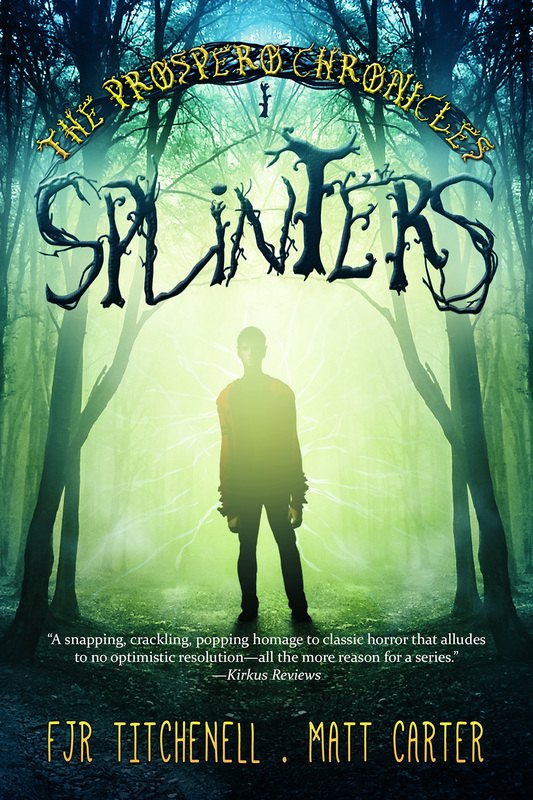
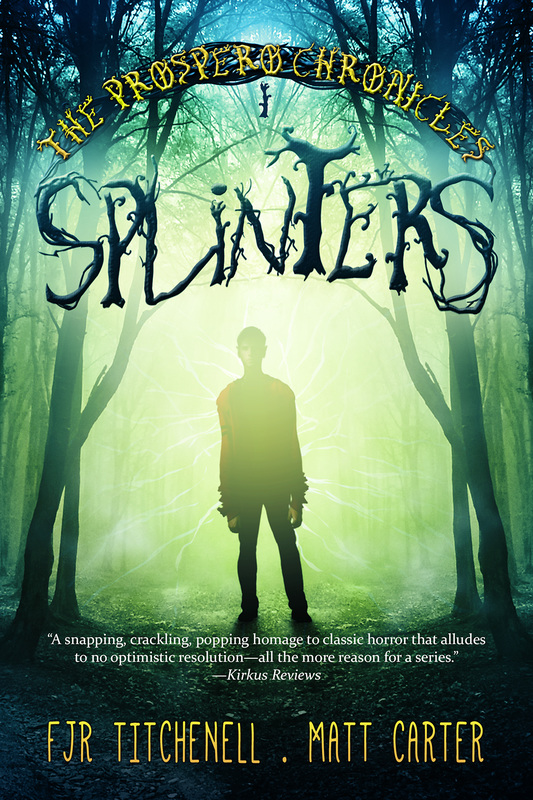
There's something rotten beneath the small town of Prospero, California. For over a century, the town's history has been rich with tales of monsters, miracles and mysterious disappearances in the surrounding woods. It’s a town where everybody has something to hide, especially those who may not be entirely human.

Sixteen-year-old Mina Todd knows about the otherworldly shapeshifters that secretly run Prospero and has dedicated her life to fighting them. Ben Pastor, in town to attend the funeral of his missing childhood friend, Haley Perkins, has never believed any of the strange stories about what happens in Prospero. When Haley turns up alive and well at her own memorial service, Ben and Mina are forced to work together to uncover what happened to her. Though they may not always understand each other, Ben and Mina’s unlikely friendship may very well be the only thing that can save the town, and possibly the world, from its insidious invaders.
Picture
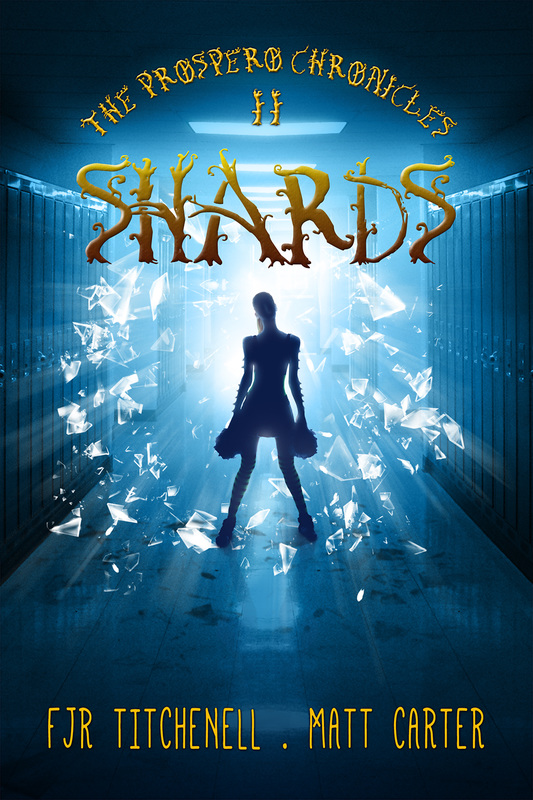
When autumn descends on Prospero, California, Ben Pastor hopes that the normality of the new school year may offer a reprieve from the town’s horrors. Mina Todd knows all too well that there are no reprieves and no normality in Prospero, especially after she starts having crippling, unexplained hallucinations of the dead. But even she can't prepare for what the coming year holds.

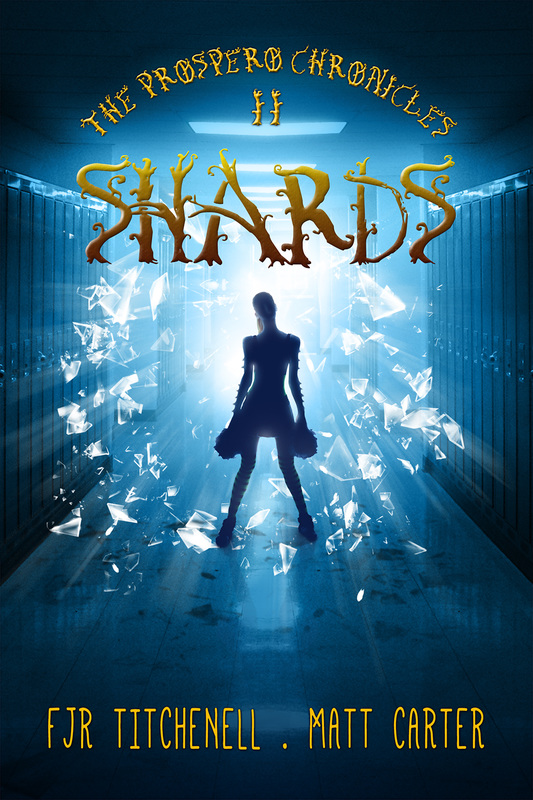
On top of the Splinters' brewing civil war threatening to make humanity its battleground, inside the walls of Prospero High, Ben, Mina and their expanding Network must face a Splinter campaign to destroy their friendship, a newly human Haley Perkins struggling to readjust to life after the Warehouse, and a Splinter assassin of untold power picking off human rebels. Ben and Mina’s one hope rests with a mysterious figure hiding in the woods outside of town, a living legend who may know how to stop this dangerous new breed of Splinter. That is, assuming he doesn’t first kill everyone himself.

Coming June 16th, 2015!
The dark history of Prospero is not over.

To learn more, click here to get your copy of Splinters, book 1 of The Prospero Chronicles.

Or here, to pre-order Shards, book 2 of The Prospero Chronicles, available June 16th, 2015.

Or here, to enter to win a free advance copy of Shards.

Or here, for four more free short trips to Prospero!

0 Comments

Four More Trips to Prospero, Part 1: Miracle Fever

5/3/2015

0 Comments

 
Picture
In honor of the upcoming release of Shards, book 2 of The Prospero Chronicles, we're reaching back into Prospero's twisted past to bring you four more short stories of everyone’s favorite Splinter-infested small town!

(Click here for the first four trips to Prospero)

To kick things off, we’re going back to the very beginning.

The Prospero Chronicles:
Miracle Fever

By F.J.R. Titchenell

Clarence - 1851


Mama didn’t cry until they pulled Edgar out of the rocks and he coughed out a breath of that glittering quartz and gold dust.

We didn’t come out west for the gold, she’d kept on saying, all the while he was down there, working to blast through the rock, all the while he was trapped there by the rocks that got blasted wrong, waiting to be dug out.

We came for the opportunity.

A lady alone could have a respectable business out west, same as a man, she’d heard. Nobody could tell her she couldn’t, no more than they could tell all those men, women and children from all over the world to stop digging in the riverbeds. The west was free for the taking, for everyone.

The riverbeds had been all but picked clean before she could plan our escape, most of the gold left worth finding buried deep in the rock. That wouldn’t matter, she promised us. Let the fools and the madmen and the big, rich mining companies with their blasting equipment go dig up the gold. We’d give them a nice comfortable place to spend as much as they could find.

Best of all, Pa would need a blessed divining rod to find us.

Edgar and I had no complaints with that plan. We got out of Kansas in the night with five horses, all the cash from the box under Pa and Mama’s bed, and all the good lace and china from grandma. We sold everything to join a guided party out to California, and when we settled in Prosperous, we were able to buy an old farmhouse for less than the cost of the boards it was made out of. There was hardly so much as a trickle of water running through the wooded hills of Prosperous unless it was raining, which was often, but there was quartz, jagged cliffs of it, and quartz meant gold. The prospectors were just beginning to be starved out of the goldfields and had started founding towns like Prosperous around the quartz hills, making it harder for the farmers in what had been unnamed wilderness to keep a claim on their land and livestock, but for the hospitality business, we were right on time.

Miners were so desperate for a warm, dry place to sleep and so ready to throw their money into their ventures to make it back later that we hardly had to fix the place up before we started making our investment back. She put Edgar and me to work on building extra rooms, and by summer we had the biggest, busiest boarding house in town and twenty-odd of the wives and children of the miners working for us as maids, cooks and bartenders.

The Golden Featherbed, Mama named the place, and liked to joke that a featherbed made of gold wouldn’t do much of a job of keeping you warm at night, but people flocked to mention of gold just the same.

Only problem was those miners. That is, the stories they brought in with them.

Edgar was older, with two years between us, almost nineteen, and like Mama, he always had his eye on the horizon, only for him the horizon was down the dress of a particular maid named Edith.

The gold wasn’t going to last forever, he told Mama, not even in the hills, and the miners weren’t either. Maybe Prosperous would keep on thriving enough from all the folks putting down roots there to keep the Golden Featherbed alive, but it wouldn’t be the way it was now. He needed to build a life for himself, and he couldn’t spend it shingling roofs, making beds, and breaking up bar fights in his Mama’s place. He had to get all the start-up money of his own that could be gotten while the getting was good, and that meant going down in those mines himself.

The miners would boast to each other in the dining room about unearthing nuggets as big as their fists, about how they were going to make enough in a year to retire for two lifetimes. Edgar was going to dig up his and Edith’s retirement, and there was nothing Mama could say to talk him out of it.

The day we heard the news about the cave-in, Mama called him a damn fool, sent me to watch the bar, and didn’t leave her office and her ledgers all day except to check on the kitchen staff.

Her face looked harder than the cliffs in the woods, the way Pa could make it unbreakable to spite him. It was like Prosperous itself, our glittering refuge, had snapped its belt across her cheek.

For two weeks, we waited that way. No, I waited. Mama already knew he was gone, and after the first week, I should have known it to.

Now the rescue teams that gave up hope of finding anything but bodies after a few days, and could only be persuaded to keep searching for those for so long because it was the shortest route back to the vein of gold the trapped miners had been cutting into, were running through the streets shouting about magic and angels in the Prosperous forests, and Mama was crying streams of dust-blackened tears and hugging Edgar, kneeling in the mounds of loose rock.

Other parents, wives, children and friends were stumbling through the mounds to the miners, shrieking, crying, laughing. The word “witchcraft” passed between a few bystanders, and a pair of women, someone’s sisters or daughters, held each other by the hands, sobbing and exclaiming to each other and everyone passing, “Miracle! Praise God, it’s a miracle!”

Edith was at work cleaning the rooms when it happened and didn’t catch up until the commotion of the people running down the trails from the mines to the town proper shouting the news became too much for the dead to ignore.

The crowd of people stumbling across the rocks was so much that I knew I couldn’t get close to Edgar and Mama if I tried, so I was standing by the outcroppings on the other side of the trail, watching, numb from the sudden good news I’d been hanging on hearing. Edith called out to Edgar and Mama when she couldn’t reach them, and Mama turned Edgar’s head toward her to show he was regaining consciousness.

Edith found her father among the rescuing diggers, pushed through the lines of people waiting to shake their hands, and threw her arms around him in a shower of thanks.

Edgar himself hardly seemed to understand what was happening. He rested in Mama’s arms more like a child pretending to sleep than a person who had been without food, water or fresh air for a fortnight. Sometimes he would lift his head straight up and open his eyes, fresher than the morning, and look around with a grin of wonder.

The sun and trees must look beautiful after long enough in the ground.

As some of the miners’ families began to shepherd them down the trail toward homes, beds, water, Dr. Anderson’s office, there was room to get closer.

Edgar’s wondering eyes found me and widened with delighted recognition, as though I had grown a foot since he’d last seen me. When they found Edith, he got up and stumbled to her through the rocks, falling and getting up like a baby deer, held her so tightly it looked painful, and kissed her in front of half the town.

Most were in such a celebrating mood that they cheered like at a wedding, especially when Edith’s father embraced them both. I watched with Mama, who wiped at her tears before she let me help her up.

Far under her breath, “miracle” was the word she chose too.


#


“Are you going back down?”

I waited until after Edgar’s turn being checked over by Dr. Anderson. I waited until Edith and her father had gone to their room for the night, later than usual under the joking pretense of Edith finishing the work she’d left to witness the miracle.

I was willing to wait for Edgar to get a good night’s sleep as well, but even when we dressed for bed at nearly eleven at night, exhaustion didn’t seem to be making any claim on him, and I needed to know.

Mama and Edith had asked him already, but they had only been able to in front of all the other miners, curious neighbors, and even a man from the California Star who was in Prosperous to report on the progress of the mining and soon began interviewing as many of the survivors and witnesses of the cave-in rescue as would let him get a word in.

Edgar had told them no. He also told them he didn’t think he’d ever be able to blow his lantern out at night again, with a big smile at the reporter. I’d been the one living with Mama’s silence while we waited to know he was dead, I’d been the one telling the staff that the Golden Featherbed and all of them would survive either way, and I’d be the one doing it again if it came to that. I needed to know if he was serious.

After washing off the dirt, Edgar looked as though he’d never been gone. He had hardly wasted at all and looked as strong as ever, stronger than I was by half, and he didn’t have a scratch or bruise from the falling rocks. Not even his fingernails were broken. He stretched out on his cot in our room as though he had never felt anything so soft and ran his hands back and forth endlessly over the seams of the quilt.

“Are you?” I repeated when I began to wonder if he had heard me.

“What am I?” Edgar lifted his attention to me.

“Are you going back into the mines?”

“Never.” Edgar sat straight upright, looking as close to as frightened as that cave-in should have made him as he had since being rescued. 

More than the relief of not having to worry about another harrowing wait like the last two weeks, it was a relief to see a response out of him at all other than his giddiness over being back in the world. The day had been stranger than the days before it, and it hardly felt real.

“Promise?” I asked.

“Clarence, I scarcely know why I wanted to be there in the first place.”

I might have thought this a comforting thing to hear if I’d imagined it. Hearing it aloud didn’t convince me of his honesty.

“Did you realize Edith might prefer you alive than dead with a king’s ransom of a homestead to your name?” I tried convince myself that was all there was to know.

Edgar didn’t smile until I did. Then he laughed too hard.

“She did say something like that,” he agreed when his breath returned.

There was a soft, hurried knock at the door from our small common living space, connected to Mama’s room.

“Boys, are you awake?”

She had to know by Edgar’s braying.

“Come in,” I answered her.

If he was lying, another argument like the ones they were having before the cave-in would at least goad the truth out of him.

Mama swept into the room in her dressing gown, her frizzy brown hair flying loose, and sat cross-legged between our cots.

“I have a clever plan,” she announced.

The trials of the day and the weeks before it were already rolling off her as everything always did. This was the Mama we knew and liked best, the one who found us reasons to be away from the house when we were small, the one who told us everything would be good someday whether Pa liked it or not, the one who always knew what to do.

“It’s a plan for you and Edith,” she turned to Edgar. “And for all of us, I won’t lie. I know you wanted to do this on your own, but hear me out.”

She added these words from recent experience, not because Edgar was showing her anything less than earnest interest now.

“You would only have to stay a few years. Maybe months would be enough, but you could set yourself up best if you get everything you can out of the rush while it lasts. You said it yourself. You can marry her when things settle down, or sooner if you want. There’ll be a room for the two of you here as long as you want it. And you won’t have to go back in the mines to make a bigger fortune than any of them risking their necks.”

She paused and looked to me for hints to explain Edgar’s lack of resistance. I shrugged, and she went on to meat of her proposal.

“Honey, from now on, you can be the gold mine.”


#


It was a surprise to no one that Mama’s plan turned out to be exactly as clever as she promised.

By morning, she’d re-lettered every sign with her own hands, and the Golden Featherbed became Miracle Manor, and by a week after the rescue teams broke through, more reporters followed the lucky first one from the Star. Miner families from towns twenty miles away made the trek to see what the papers had dubbed The Miracle Mine. And every one of them came to Miracle Manor first. The ones we had room for stayed their nights, and the ones who didn’t stayed long enough to hear Edgar tell his story (for an extra dollar a head and the cost of drinks besides), and pick up a pamphlet on the wonders of the mine and how to find it (fifty cents), or follow one of the tour groups Edgar led personally to the mouth of the mine, but no further, to touch the rocks and whisper to each other of the power they could feel (five dollars).

A few of the other miners who’d survived the cave-in started trying to make a buck off their stories too, from anyone who would listen, but the other miners didn’t have Mama.

She had us all working on the flyers for Miracle Manor’s new rates and amenities and littering the town with them, the prettiest and handsomest maids and barkeeps handing them out wherever there was choked traffic. The Experience Lounge, the room she repurposed for Edgar’s performances recounting his survival story was curtained to be dark as a mineshaft even during noon matinees, except for Edgar’s lantern, and people left exclaiming that they could hear the picking of the faraway rescue team. She sat in on one show a day to give Edgar suggestions on embellishments, and she once had to pay Sheriff Auklee a fifteen dollar fine when she tried to nail a plaque for the Miracle Manor onto the town welcome sign, accidentally knocked the last two letters off of “Prosperous,” and they had to be patched back on with a plank of wood that would probably blow down in the next storm.

We made the fine back twenty times over that night.

Edgar got to keep ninety percent of the profits from the show and the tours to save up, the other ten and the extra business he brought the boarding house itself would let Mama die a rich woman even if Prosperous was mined clean and abandoned within a month, and give me a solid start whenever I was ready to move on as well.

When or how that would happen, I didn’t know. I wasn’t the one who knew how to make things happen, like Mama, or the one things always happened for, like Edgar. Even if I were ever lucky enough to have a story about a miracle to tell, I wouldn’t be able to tell it the way he could, with a voice that could fill a saloon, a steady smile when the time was right, and a breathless pause just the right length when a smile wouldn’t fit.

No pretty girl was ever going to beg her father to dig me out of a rockslide for her.

There was more worrying me than the fact that all the money in the world wouldn’t buy me the first idea about what to do with it, though.

It started with three patrons, a man so old it looked like it was taking a small miracle of his own to keep him on his feet, a woman who could have been his granddaughter with smooth hair and hands that definitely had not been working any job in a mining town for long, and a man with hair longer and skin paler than hers, whose age I couldn’t guess any better than somewhere between forty and seventy.

They crowded around the front desk together while I was checking people in and selling tickets.

“We need to speak with Edgar Hopkins,” the woman began sweetly, pushing one of the Miracle Manor flyers across the desk.

“Three dollars for the three of you for the eight o’clock Miracle Mine Experience,” I rang them up. “Will you be staying in the Manor?”

“No,” she giggled. “I mean we need to see him privately.”

“We haaave some questions,” the black-haired man said in an accent so strange I wasn’t sure at the first that he was speaking English, “about his escaaaaping.”

Prosperous was full of immigrants, looking for the gold same as folk from back East. He didn’t look or sound like he could be family to anyone I’d ever seen before, but Mama always said that one person’s money was just as good as another, so I didn’t take too much time trying to figure where he was from. The routine was the same.

“The Experience includes his whole story,” I assured them, “but private Experiences are fifty dollars for groups of less than that. Unless you’re with one of the papers?”

“Yes,” said the woman immediately. “We’re with the Prosperous Chronicle. We’d like an interview with Edgar to headline our first issue.”

Oh. A startup local paper. Represented by three people I’d never seen before in this very small town. It could have been be a great opportunity or a clear scam, and I knew Mama wouldn’t trust me to handle telling the difference.

No, that wasn’t true. Worse than that, she would trust me to handle it, and I’d find a way to handle it wrong, no question about it.

“I see. You’re going to have to talk to the owner. I’ll get someone to find her.”

“Is this soooo necessary?” the foreign man asked.

“Thank you,” the woman said. “We’ll wait.”

The elderly man nodded dreamily beside her.

I picked up the cowbell we’d repurposed from the Manor’s farmhouse days and shook it to signal for assistance.

Edith burst in from the dining room doors before the bell’s hammer had struck twice, worrying her apron with both hands and sweating in spite of the cool mist outside. The kitchen must have been in chaos.

“Take the register?” I asked. It was hardly a break, with the line newly growing for the evening performance, but it had to be more peaceful than whatever she had just come from. I gestured to the line with the three strangers at the head of it, and her already wide eyes widened further at the sight of them. “I need to find-”

“I have to talk to you.” She let go of her apron to clutch my elbow instead and pull, meaning to drag me into the first story office behind the desk then and there.

Her tone was so startlingly desperate that I wanted nothing more than to follow wherever she wanted to drag me and hear exactly what I could do to help her, but family business was a hard habit to fight.

“We have a line,” I whispered back, nodding at them.

“Rose!” Edith shouted toward the dining room without letting go of my arm. “Rose!” she took the bell from me and shook it hard. “Reception!”

Rose answered the call, calmly bewildered and wiping butter off her fingers, not an escapee from a short-staffed kitchen at all.

“Thank you!” Edith exclaimed, handing Rose the bell and pulling me farther away from the desk.

“We’ll be back in a moment,” I told the three strangers and Rose as apologetically as I could while following Edith, without stopping to worry until the office door was latched behind us how many talkative neighbors had now seen me retreating someplace private with my brother’s fiancée in a peculiar manner.

Too late to be helped now.

“What’s the matter?”

Edith let go of me to light the office lantern and held it close in front of her like a shield against the long shadows it cast behind the furniture.

“What did those people want?” she asked.

“Edgar, same as everybody,” I answered, more bitterly than I meant it.

“Same as everybody, or different?”

There was no denying their strangeness.

“They wanted a private interview,” I said. “Or a private something. Why?”

She put her eye close against the crack in the door, trying to watch the strangers’ dealings with Rose.

“Edith, why?”

She looked at me.

“Edgar isn’t himself.”

I’d been having similar thoughts in what time I’d spent with Edgar since the cave-in, which hadn’t been much. Between shows and tours, he was either walking or playing cards with Edith or drinking until he couldn’t do either.

“He nearly died,” I told her what I’d told myself. “He was buried alive. He’s good at pretending it’s all a show now, but he’ll need time to feel safe again.”

“No,” said Edith with a firm shake of her head. “I mean he isn’t Edgar Hopkins. He isn’t your brother. He isn’t the same person who went into that mine.”

I almost called her hysterical. There was little else that talk could be. But I wanted to know if she could tell me a reason for how the understanding Edgar and I had always had since we were children no longer seemed to exist.

A reason other than that she had taken up the time he had for me before.

“How do you know?” I asked.

“When we’re alone, he...” she looked over both shoulders as if eavesdroppers might have materialized in the dark office since we’d been there. “He didn’t used to be this way. We did things before, some things, when we could get privacy enough, but...” she was fighting tears and winning, barely. “It’s all he wants to do now, and it’s different. When I try to talk to him... he hates me. He hides it, but I know.”

She had more to go on than I had of late, but I had been hoping for something solid. She saw my disappointment and shook her head, the hints of tears disappearing.

“It’s not only how he acts. His body, it isn’t human. Sometimes I see him bend in ways people can’t, and once I saw him cut himself on a glass he broke, he didn’t know I was looking, and I saw the blood flow back into him!”

She peered back through the crack in the door, and I looked over her head at slits of the silhouettes of the strangers still haggling with Rose.

“I went to see Mr. Arkham,” Edith said. “I used to help tutor his daughter, and he was in that mine with Edgar for two weeks. I thought he could help me understand what happened to him there, but I haven’t been able to find him anywhere, not for days, and when I first went to his house, those three were just leaving it!” she pointed past the closed door at the strangers. “Have you seen any of the men who were rescued today? Because I can’t find any of them!”

I thought hard and suddenly couldn’t remember running into any of them all morning, not Mr. Cartwright or Mr. Hardwick, who always broke their fast at the Manor.

“No,” I said. I said, uncomfortable. “You think those reporters have been doing something to them?”

“I’m certain,” said Edith.

“And they’re looking for my brother right now!” I finished.

The strangers had left the desk by the time I ran back out of the office, Edith rushing to keep up with me.

“I told you,” she whispered, “that’s not your brother.”

“Where did the reporters go?” I asked Rose.

“They’re in the Experience Lounge.” She pointed. “With Mrs. Hopkins.”

I followed her direction.

“You told me he’s different,” I said to Edith along the way. “That doesn’t mean he’s not my brother. If those people are looking for all the survivors of the mine, they might know what happened. And if they know what happened, they might know how to fix it, but it’s not by letting him disappear, if that’s what happens to the ones they find!”

“I want him back too!” Edith reproached me. “I only wanted you to understand, if we can’t fix this, your mother wants to make the wedding a public event, she wants to do it as one of the Experiences, and I can’t, I can’t do it, but I don’t know what I’ll-”

I stopped long enough to turn to look at her.

“My mother will understand,” I promised. “I know she wouldn’t have suggested it if she didn’t think the wedding was going to happen anyway. Nobody will make you stay with him if you don’t want to, and no one will threaten your job. Not her.”

I opened the door to the Experience Lounge too late to stop when Edith said, softly,

“She’s not what I’m afraid of.”

Mama and Edgar sat at the edge of the stage where he told his story twice a day, speaking with the three strangers who shared one of the small tables closest to it.

I turned back toward the front desk. There was no way to keep everyone in the Experience Lounge from hearing without backing suspiciously out of the room again, but I said it only as loudly as I had to for Rose to hear me over the line in front of her.

“Have someone fetch Sheriff Auklee.”

The three strangers turned to look at us, though without acknowledging my words.

“You are the younger Mr. Hopkins?” the foreign man greeted me cheerfully. “Why did you not say? And am I meeting the younger Mrs. Hopkins to be? We were just to discuss an opportunity for your Edgar!”

“An opportunity for this bunch to steal him away,” Mama corrected with the friendly shit-rejecting way she kept for negotiations. “But we’ll see if they have any ideas worth considering.”

Edgar smiled and nodded, without that easy way he had in his shows, looking as if he would have preferred to be anywhere else, which was strange even by recent standards. Ever since the mine, he’d had nothing but patience for all Mama’s arrangements for his success.

“If you could just give us a few more minutes to work out the details,” said the woman, “Perhaps we’ll all be celebrating by dinnertime.”

My stomach was making uncomfortable rotations. I had never done anything like this before, almost accusing three people of murder, while asking them for help, never mind while Mama was trying to have a business meeting with them. Maybe I’d barged in too quickly. What was I planning to say?

“A matter of fact,” I started, “we had some questions about-”

That was when Edith picked up a glass from one of the tables and threw it at Edgar.

The glass shattered against his skull, leaving a red web of cuts on his forehead, but only for a few seconds.

Exactly the way Edith had described, the blood only dribbled a few inches down his face before retreating back under his skin, which healed over as if it had never been broken.

Edgar stood up from the stage and stepped sideways toward the exit, with a shrug for the three strangers, the shrug of a child caught stealing cookies, but with even more than Edgar’s grown up cockiness.

“Do you believe me?” Edith turned to me and demanded. She didn’t wait for my answer before throwing the next glass at the foreign man, producing the same unbleeding result.

I couldn’t disbelieve any of what she’d said she’d seen, anything about how strange a thing was happening, but Edgar gone completely, that I couldn’t believe. He was changed, but he was right before us, and these people meant to hurt him.

The elderly man stood.

“Locusta,” he addressed Edgar in a voice too clear for his body’s feebleness, and Edgar acknowledged him with a half-bow as though he recognized the name.

“Abner,” he answered, in a voice made by Edgar’s throat, but with a woman’s lilt.

“Locusta,” repeated the old man, Abner, “we can still do this quietly. There’s no reason to disturb this poor town.”

Edgar laughed, a feminine laugh, taking another step toward the door.

Edith was still throwing glasses.

“Where is the real Edgar?” she shouted between throws. “Tell me how to find him!”

The strangers ignored her as if she were an irritating downpour of rain.

Soon she worked her way to a bottle that was only half empty of whiskey. It broke against the table the strangers had been sharing, splashing all three. She picked up one of the kerosene lanterns next, lit for the occasion of the meeting, and held it high.

This caught their attention, causing all three to raise their hands defensively, and the foreign man to swing the back of his fist at her.

She was too far from him to reach, but his arm stretched after her like taffy and wrapped around her wrist, shaking her until the lantern slipped to the floor.

“You understand noooothing!” he scolded her, dragging his vowels even longer than his odd usual manner in anger. “You will make us act in too much rush now!”

His expression changed to confusion and then concern while he held her wrist, as though the feel of it was something unexpected. She tried to pull away from him, and I reached to pull her by the shoulders to help, but the foreign man dragged her past my reach and close enough for him to put his unstretched hand on her belly.

“It is from after,” he said. It didn’t sound like a question.

“What was?” Edith asked, defensive.

“Your child is from after the mine,” said the foreign man. “For this I am sorry.”

His unstretched hand changed, sharpened to the shape of an enormous straight razor, and cut her once across the belly, once across the throat, before he dropped her on the floor, her blood flowing endlessly outward and never back.

Mama was across the room and back with her shotgun from under the Experience Lounge bar before Edith hit the ground, and put a shell of buckshot in the foreign man.

The insides of his brain were only slightly slower to go back where they belonged than his trickles of blood had been.

And then started again, when the second shell struck the same target.

Abner stepped over Edith’s body and broke into a run, not at Mama, who was hurrying to reload, but at Edgar, who sprinted for the door, faster than I’d ever seen Edgar move.

Abner’s decrepit body was keeping pace with him somehow, weaving through and over the tables, limbs stretching and twisting into whatever shapes would bring him closer to Edgar with the dry sound of breaking wood, shapes no person could take, and I had to do something.

I had to do something.

I picked up the nearest lantern and threw it at Abner.

The glass shattered and the kerosene spilled in a blazing stream down one of his legs.

He fell and screamed, the flesh under his charring trouser leg melting like a combination of burning pork rinds and tallow.

“Thank you, little brother!” Edgar laughed in that strange, female tone, before escaping out the door.

When the foreign man’s face returned to its oddly angled usual shape, it searched the room and took a horrified expression.

“Where is Juuulia?”

Abner shook his head gravely from where he had fallen. His leg was regrowing as well, though slowly.

“There will be nooooo telling what she will be when we are next finding her!”

“No, there won’t,” said the woman, patting the foreign man’s arm soothingly with the beginning of a smile. “But at least we know who Abner will be.”

She grinned at the man newly entering the room, stepping sideways to block his view of Edith’s body.

“Good afternoon, Sheriff Auklee,” she said.

Abner struggled to his feet.

“Yes, good afternoon,” he shook the Sheriff’s hand, his trouser leg still smoking. “We’re so glad you’re here. Something terrible has happened at the Miracle Mine.”

“Wait!” Mama and I protested at once.

The Sheriff looked back at us, but when the woman smiled at him again, he seemed to forget why he had looked back at all and followed Abner out toward the tour trail.

“You do not know what you have unleashed on this poor nowhere.” The foreign man shook his head at me.

“And they never will, Alexei,” said the woman.

She was wresting the gun from Mama’s hands, and Mama was hardly stopping her. Her face had gone empty and faraway, and when she shook herself out of whatever daydream had taken her, she ran to wrap her arms around me, without looking at the gun or the strangers, as if she had forgotten every danger they had shown themselves to pose.

“My boy, my only boy,” Mama muttered near my ear. “I was so worried about you.”

Before I could correct her, the woman looked at me, and nothing existed but her sweet smile.

When I could see the broken glass and the dead woman on the floor, I could not for the life of me say how they had gotten there.


Picture
There's something rotten beneath the small town of Prospero, California. For over a century, the town's history has been rich with tales of monsters, miracles and mysterious disappearances in the surrounding woods. It’s a town where everybody has something to hide, especially those who may not be entirely human.

Sixteen-year-old Mina Todd knows about the otherworldly shapeshifters that secretly run Prospero and has dedicated her life to fighting them. Ben Pastor, in town to attend the funeral of his missing childhood friend, Haley Perkins, has never believed any of the strange stories about what happens in Prospero. When Haley turns up alive and well at her own memorial service, Ben and Mina are forced to work together to uncover what happened to her. Though they may not always understand each other, Ben and Mina’s unlikely friendship may very well be the only thing that can save the town, and possibly the world, from its insidious invaders.
Picture
When autumn descends on Prospero, California, Ben Pastor hopes that the normality of the new school year may offer a reprieve from the town’s horrors. Mina Todd knows all too well that there are no reprieves and no normality in Prospero, especially after she starts having crippling, unexplained hallucinations of the dead. But even she can't prepare for what the coming year holds.

On top of the Splinters' brewing civil war threatening to make humanity its battleground, inside the walls of Prospero High, Ben, Mina and their expanding Network must face a Splinter campaign to destroy their friendship, a newly human Haley Perkins struggling to readjust to life after the Warehouse, and a Splinter assassin of untold power picking off human rebels. Ben and Mina’s one hope rests with a mysterious figure hiding in the woods outside of town, a living legend who may know how to stop this dangerous new breed of Splinter. That is, assuming he doesn’t first kill everyone himself.

Coming June 16th, 2015!

The dark history of Prospero is not over.

To learn more, click here to get your copy of Splinters, book 1 of The Prospero Chronicles.

Or here, to pre-order Shards, book 2 of The Prospero Chronicles, available June 16th, 2015.

Or here, for four more free short trips to Prospero!


0 Comments

Book Review: I'm Glad I Did

7/20/2014

0 Comments

 
Picture
Book Review:
I'm Glad I Did
By Cynthia Weil

Soho Teen, January 2015

A-

(Disclosure: I received a free ARC at a publishing industry event)
The Basics:

Justice "JJ" Greene wants nothing more than to write music. Her all-lawyer family has other ideas. When she manages to negotiate her way into a record company summer internship, determined to prove what she can do, she finds herself in the thick of 1960s music biz intrigue. Just when she’s put together the perfect song (with the help of Luke, a particularly cute lyricist with both the music and the intrigue in his blood), their demo singer turns up splattered on the sidewalk. It's up to JJ and Luke to unravel the mystery that surrounds her death and weaves their two families together, and, if they have time, to pitch their great breakout song.

The Downside:

A few clichéd, matter-of-fact announcements of what people feel and what family is like detract from the general lifelike quality of the characters, and for a murder mystery, the secrets to be uncovered are often over-sanitized and, as a result, underwhelming.

The Upside:

The specialized, period setting is immersive and alive. Weil uses her life experience to great effect, infusing the story with distinct flavor without losing timeless YA relatability. JJ will appeal to anyone who's struggled with making an irresistible passion into a serious career, or with being something other than what loved ones are hoping for. The whodunit tension surrounding the loveable but potentially gray characters keeps up the pace, and the generations-long drama of pre-civil rights interracial love is heartstring-tugging without ever cluttering the story at hand. I’m Glad I Did is a story about the beauty of interpersonal and artistic love and integrity in a world that supports no combination of the above, one well worth experiencing because (forgive me), you'll be glad you did.

Agree? Disagree? Comments are always welcome! Or keep up with my fictional musings by joining me on Facebook, on Twitter, or by signing up for email updates in the panel on the right!

0 Comments

Guest Post by Citadels of Fire author L.K. Hill

6/14/2014

0 Comments

 
Picture
Today I'd like to welcome L.K. Hill, author of the new historical fiction release, Citadels of Fire, and ask her one of my favorite questions!

What scares you, and how does it influence your writing?

I was asked to address what scares me and how it influences my writing. This is such an interesting question, and one I don’t think I’ve ever thought about in much detail. Obviously what scares me would influence my writing, but I’ve never thought about it in that way before.

In terms of Citadels of Fire, my new historical fiction, I think it’s really all about letting go of your insecurities. Inga, my female protagonist, is a bit of a hard sell as a character. As female characters go, she’s not particularly strong. And let’s face it, we like our female characters to have some spunk, right? Her arc throughout the trilogy will be the most dynamic, though. This is a story about her becoming a strong woman. And by strong, I mean confident, secure, able to let someone else love her.

Inga is a servant and has been told her entire life how little she is worth compared to the upper classes. She’s experienced little that isn’t fearful, painful, and dark. Because of this, she feels very unworthy, very inadequate. She doesn’t know how to value herself enough to let someone else truly love her. It’s something she’ll have to learn as the story progresses.

We all have feelings of inadequacy at some point in our lives. Being familiar or intimate with another human being, even if it’s just on an emotional level, can be a scary thing. In my opinion, the vast majority of us do just fine. That fact is a triumph of the human spirit, and one that’s often taken for granted.

My fears definitely influence my writing. This story appeals to me because, at least to some extent, I’ve been in Inga’s shoes. Most of us have. Take her story to an extreme, throw in a romance with horrendous obstacles, and set it against the backdrop of Ivan the Terrible’s brutal reign, and you just might have something worth reading.

So what’s the moral of the story? 1) If you want to write well, fears are a great place to start. They’re compelling, and something every audience can identify with. Just make sure you also have some way to overcome them. Otherwise, your story loses its hope. 2) As a reader, understand that most great stories are born out of either human fear or the desire to experience true beauty. And those two things are not necessarily mutually exclusive.

Here’s to looking our fears in the face and living to write about the tale.

Picture

About Citadels of Fire

In a world where danger hides in plain sight and no one aspires higher than what they were born to, Inga must find the courage to break the oppressive chains she’s been bound with since birth. Even as a maid in the infamous Kremlin, life in 16th-century Russia is bleak and treacherous. That is, until Taras arrives. Convinced that his mother’s death when he was a boy was no mere accident, he returned from England to discover what really happened. While there, he gains favor from the Tsar, later known as Ivan the Terrible, the most brutal and notorious ruler ever to sit upon the throne of Russia. Ivan allows him to take a servant, and to save Inga from a brutal boyar’s intent on raping her, Taras requests Inga to stay in his chambers. Up against the social confines of the time, the shadowy conspiracies that cloak their history, and the sexual politics of the Russian Imperial court, Inga and Taras must discover their past, plan for their future, and survive the brutality that permeates life within the four walls that tower over them all, or they may end up like so many citizens of ancient Russia: nothing but flesh and bone mortar for the stones of the Kremlin wall.
Click here to order your copy!
Picture

About L.K. Hill

L.K. Hill has a degree from Weber State University, and has won numerous writing awards, including garnering first place in the 2011 League of Utah Writer Writing Contest. When she’s not writing, Hill relaxes with her family in Ogden, Utah, while maintaining constant communication with her many followers.

You can find her on her blog, on Facebook, and on Twitter.

0 Comments

Book Review: Leviathan

12/15/2013

0 Comments

 
Picture
Book Review:

Leviathan

By Scott Westerfeld

Simon Pulse, 2009

A-

(Click here to order)
The Basics:

In a steampunk alternate WWI timeline, Prince Aleksander of Austria is in hiding from his own people after his parents’ assassination, running across Europe in an armored, walking war machine with a tiny band of loyalists. Deryn Sharp is hiding her age and gender so she can serve aboard the Leviathan, a genetically engineered hydrogen-breathing whale, one of the best of the British Airforce’s living, lighter-than-air crafts. Hiccups in both their plans force Alek and Deryn, their people, and their technology to work together to survive.

The Downside:

The children’s book styling of much of Leviathan combined with the world war scope of the action gives the story a dispassionate distance at times. The events are much bigger than Alek and Deryn, whose critical contributions often feel unnoticed and haphazard. Most of the crew of the Leviathan is fairly faceless, and the characters respond emotionally to some instances of violence while taking full-scale battles in stride with the caprice of a Star Trek crew.

The Upside:

For the most part, the juxtaposition of beautiful illustrations with YA-level violence, coming-of-age angst, and political intrigue works in the same way the steampunk elements do, by combining past with present and future, nostalgia with speculation and depth. Deryn is another of the cool, unapologetic, thoroughly uninsulting female heroes Westerfeld does so well, and Alek’s transition from a heavily sheltered kid from a powerful and loving family, to an orphaned political pawn, to a heroic decision maker in his own right makes it impossible for me to choose between them which perspective I look forward to more.

It takes more than half the book for the two of them to end up in the same place at the same time, but once they do, the intimacy of character drama that was missing from much of the book, particularly on the Leviathan side of things, does arrive. I can’t wait to read on in the series from here.

0 Comments
<<Previous

    Get updates & coupouns from
    Fiona J.R. Titchenell:

    Subscribe

    * indicates required
    Interests

    Search This Blog:

    Support Fiona J.R. Titchenell and get exclusive content:

    Picture

    Find
    ​Fiona J.R. Titchenell:

    Picture
    Picture
    Picture
    Picture
    Picture
    Picture

    Archives

    November 2022
    October 2022
    December 2021
    October 2021
    September 2021
    March 2021
    October 2020
    September 2020
    August 2020
    July 2020
    June 2020
    April 2020
    March 2020
    December 2019
    October 2019
    September 2019
    August 2019
    July 2019
    June 2019
    May 2019
    March 2019
    February 2019
    January 2019
    December 2018
    November 2018
    September 2018
    August 2018
    July 2018
    June 2018
    May 2018
    April 2018
    March 2018
    February 2018
    January 2018
    October 2017
    September 2017
    August 2017
    July 2017
    June 2017
    May 2017
    April 2017
    March 2017
    February 2017
    January 2017
    November 2016
    October 2016
    September 2016
    August 2016
    July 2016
    June 2016
    May 2016
    April 2016
    March 2016
    February 2016
    January 2016
    December 2015
    November 2015
    October 2015
    September 2015
    August 2015
    July 2015
    June 2015
    May 2015
    April 2015
    March 2015
    February 2015
    January 2015
    December 2014
    November 2014
    October 2014
    September 2014
    August 2014
    July 2014
    June 2014
    May 2014
    April 2014
    March 2014
    February 2014
    January 2014
    December 2013
    November 2013
    October 2013
    September 2013
    August 2013
    July 2013
    June 2013
    May 2013
    April 2013
    March 2013
    February 2013
    January 2013

    Categories

    All
    Aliens
    Announcement
    Blog
    Books
    Children's
    Comics
    Confessions
    Contemporary
    Couples
    Crafts
    Crushes
    Dragons
    Dystopian
    Fantasy
    Free Fiction
    Games
    Gender Issues
    Guest Posts
    Guests
    Guilty Pleasures
    Hero/Villain Pairs
    Historical
    Holidays
    Horror
    Humor
    Hunger Games
    Hunger Games
    Lists
    Literary Rants
    Lost
    Love
    Love Triangles
    Metafiction
    Movies
    Music
    Musicals
    Na
    Nonfiction
    Parents
    Reviews
    Romance
    Romantic Gestures
    Sci Fi
    Sci Fi
    Shakespeare
    Short Stories
    Steampunk
    Theater
    Tragedy
    Tv
    Twists
    Vampires
    Witches
    Writing
    Ya
    Zombies

Powered by Create your own unique website with customizable templates.