Fiona J.R. Titchenell's Official Homepage
  • Confessions of the One and Only Fiona J.R. Titchenell (That I Know of)
  • About
  • Novels
  • Short Stories
  • Events
  • Review Archive
  • Review Policy
  • Links

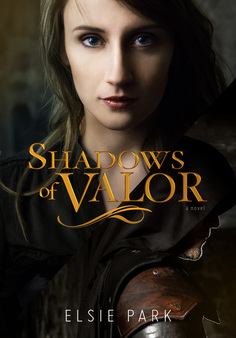
Book Review: Shadows of Valor

8/31/2013

2 Comments

 
Picture
Book Review:

Shadows of Valor

By Elsie Park

Jolly Fish Press, 2013

A-

Click here to pre-order!
(Based on an advance copy provided by publisher)
The Basics:

Sir Calan lives a double life, as a respected knight and the legendary Shadow, terror of all manner of criminals. In both capacities, he’s a servant of King Edward and of law and order, but The Shadow’s constant contact with the worst humanity has to offer threatens to tear him apart. When investigation of a smuggling operation demands that he court Lady Genevieve to keep an eye on her other suitors, he finds himself drawn to her cousin, Elsbeth, who may be able to bring him closer to who he really is.

The Downside:

A few imperfectly used elements of period speech may bother neurotic English majors such as myself. The moralizing can sometimes get a little heavy, understandably, given the strong overarching theme of varied, gray, and conflicting codes of honor. The foreshadowing and exposition of the mystery are also on the overstated side and include one of those extra-long Bond-style villain’s monologues I tend to rail about.

The Upside:

Elsbeth and Calan make a fascinating couple. Setting aside the fact that she knows him as two people (which does make for some great drama all on its own), she’s a midwife, smart and tough by necessity, but also pious, traditional, a little naïve, and determinedly nonaggressive and forgiving. He’s a knight by day and a masked crime fighter by night, wanting to live by a perfect, chivalrous code, frightened by the amount of gray his work brings out in him. The intellectual respect they have for each other feeds both their arcs and adds great substance to their relationship. Combined with the colorful medieval backdrop, it makes for a sweet, exciting (squeaky-clean if that matters to you) romance adventure.


Agree? Disagree? Comments are always welcome! Or keep up with my fictional musings by joining me on Facebook, on Twitter, or by signing up for email updates in the panel on the right!
2 Comments

Fi's Five Favorite Fictional Love Triangles #1: Lena/Alex/Julian (The Delirium Trilogy)

8/27/2013

1 Comment

 
Picture
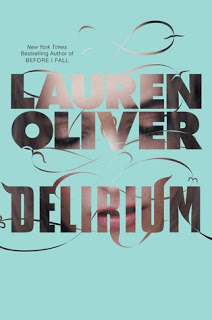
(Click the links to read Love Triangle #2, #3, #4, #5, and my defense of love triangles in general. Also see my review of Delirium.)

First,

****Massive Spoiler Alert****

I feel bad even putting all three of their names in the title and spoiling the fact that the trilogy contains a love triangle at all, that’s how expertly timed the progression of this storyline is, but if you’ve so much as glanced at the Goodreads threads about it, I’m sure you’ve figured out that much.

Now, there are a lot of love triangles in YA fiction of admittedly varying quality. The overload of interchangeable girl/good boy/bad boy setups in the genre is one of the main reasons for the recent backlash against love triangles of all kinds in all contexts, and understandably so.

As I’ve made clear in my Defense of Love Triangles, I think the backlash is excessive and enjoy many love triangles in and out of YA. So don’t get me wrong, I’m not calling this one a sole exception to a general rule, but when I told myself to choose just one favorite YA triangle to include on this list…

Picture
Um... no.
Picture
Uh-uh.
Picture
Closer, but no dice.
In spite of the many options that would have made finding pictures for this entry vastly easier, the winner was clear.
Picture
Sorry, Gale. You're just not that important.
Let’s start with the apex, Lena.
Picture
Pictured with one eye obscured, per the norm.
Lena is an everygirl protagonist reacting to a high concept universe who manages to do so in an uninsulting manner. That’s no easy task. In Lena’s world, love is illegal. It’s been classified as a disease, amor deliria nervosa, and great care is taken to protect the public “health” (and the docile apathy that comes with it). A mandatory surgical “cure” is administered to all citizens when they come of age, Uncured boys and girls are kept separate, and constant surveillance scans for hints of love in the underage population and relapses in adults.

Over the course of the trilogy, Lena has to go from being a by-the-book girl hoping to get through life without screwing up too badly, to a runaway willing to risk everything for her love, to a revolutionary who has seen the best and the worst sides of love and continues fighting for everyone’s right to pursue it.

No, she isn’t the most unique and colorful character ever designed, but she’s the kind of hero whose skin is easy to slip into, with none of the feeling of bland whininess that so often gets in the way.

Now her first love, Alex.
Picture
(As he would have appeared in the failed TV adaptation)
Alex is an Uncured from the secret, traveling camps outside the legally inhabited zones. You could call him the bad boy. He’s got some issues. He gets angry. He likes fire, a lot. He helps stage protests in the legal cities. He’s an embodiment of all the chaos and passion and impaired judgment the anti-love propaganda warns about. But as decent people do, he can also pull himself together for love.

When he falls in love with Lena, he wants so badly to do the right thing for her, and he’s trapped between the possibilities of drawing her into his dangerous outlaw lifestyle, or seeing her turn eighteen and be lobotomized. He comes clean to her about what he is after a few meetings, and carefully, when she asks, tells her about what life is like on the outside.

Lena’s tracking of the progress of her symptoms is one of the most vividly accurate artistic representations I’ve ever encountered of what falling in love feels like.

Ever.

Right after she asks to go with him instead of be cured of it, their cover is blown, and the authorities are sent after him, but he stays long enough to rescue her from her family and take her with him to the city wall. She makes it across and looks back just long enough to see him fall under a hail of bullets. End of book 1, Delirium.

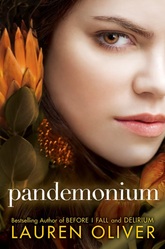
Book 2, Pandemonium, is about the second love, Julian.

Picture
(Again, could-have-been TV version)
Julian is the son of a government official and a noted speaker in support of the cure. He can’t be cured due to a neurological condition, and his father uses him as a poster child for the cause of increasing the effectiveness and application of the procedure. He wants to believe that he’s part of a good thing, but the doubts are there.

After integrating herself into Uncured society. Lena’s sent to make contact with Julian, and they end up being held hostage together for political reasons that aren’t the point of this post.


Being stuck in the same room for days, then escaping together to contact Lena’s people for help, they naturally end up getting to know each other. He finds out that the organized Uncured aren’t monsters, and she finds out how conflicted he is about the propaganda he preaches.

Lena is the first girl Julian’s ever been allowed to be close to, and while she’s still learning to live with the worst part of love, the grief of losing it, she has to watch him go through the same process she did of falling in love and accepting it, hoping that she’s done him a favor. When they escape back to unregulated territory, he has just one condition. “We stay together.”’

She agrees.

… And that’s when Alex catches up with her, after escaping from the prison he was dumped in after all those bullets that should have killed him didn’t quite.

No image truly conveys that level of "ouch."
Come book 3, Requiem, all three of them have to fight on the same side in the all-out war for the right to love, while warring with each other because of love.

That’s what’s so exceptional about the Delirium trilogy. It takes its love to depth most triangles fall short of. It isn’t a story about a fickle girl who can’t seem to help developing two relationships at the same time, or a decisive girl with one boyfriend and one sore loser stalker.
Picture
Ahem.
Lena gets a whole book to fall in love with each boy, and so do we. There’s a whole book of healing after Alex’s very believable death scene before he crashes the party. By the time we get the two boys in the same room, it’s hard to avoid feeling conflicted with Lena, let alone blame her (or anyone else involved) for it.

And it perfectly fits the theme of the story, celebrating love in all its beauty and ugliness.

How does it resolve?

Many a complaining fan will tell you, “It doesn’t.”

I disagree.

After all that time Alex spent in prison telling himself that he’ll never see her again, that he hopes she’ll move on and be happy without him, he doesn’t take it quite as well as he wants to when it appears she’s done just that. It takes a while before they can work things out, and in the meantime, Lena can’t instantly shake off the feelings she’s spent a while developing for Julian, especially with him right there, offering a shoulder to cry on.

In the end, Lena and Alex do agree that they still want to be together, with Lena adding, “But it’s complicated.”

Because it is, and it always will be. Cured life is simple, life with love is complicated, and that’s the life they’ve all chosen, for better or worse.

Agree? Disagree? Comments are always welcome! Or keep up with my fictional musings by joining me on Facebook, on Twitter, or by signing up for email updates in the panel on the right!



1 Comment

Confessions of the One and Only F.J.R. Titchenell (That I Know of) now available via email!

8/25/2013

0 Comments

 
Hey, everyone.

I've added a signup sheet so that you can now get notifications of new posts on Confessions of the One and Only F.J.R. Titchenell (That I Know of) delivered directly to your email.


The signup sheet shall sit there in the right hand column evermore, waiting for attention, but for today, I'm blowing it up big and pretty in a post of its own and turning on the puppydog eyes.
If you enjoy my snarky reviews, author guests, literary rants, and lists of the best and worst of pop culture, it would mean the world to me if you'd sign up below. You'll never have to miss one again!
* indicates required
0 Comments

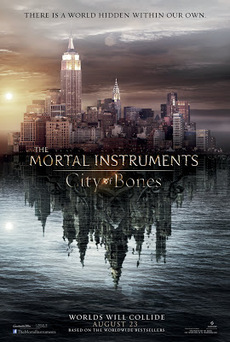
Movie Review: City of Bones (The Mortal Instruments)

8/24/2013

0 Comments

 
Picture
Movie Review:

City of Bones (The Mortal Instruments)

August, 2013

D

Note:

Like most of my movie reviews, this one is written for readers of the book. In this case, I’m neither a great fan nor a determined attacker of the source material. I’ve read the first book in the Mortal Instruments series, the one this movie is based on, and enjoyed it, but the way the ending falls apart has prevented me from working up the enthusiasm to read the rest just yet, so forgive me if I misunderstand any bits of later canon this movie brings in early.

You can read my B- review of the book here.

The Basics:

Clary develops the ability to see a hidden magic world of demons and Shadowhunters. When her mother is kidnapped, she has to cooperate with these Shadowhunters to get her back.

The Upside:

The movie starts out as a decent translation of the book with a few improvements. Some backstory is introduced earlier, giving hope that the end exposition might not end up as one long, dragging clump, and Clary gets to witness her first demon slaying across a crowded room instead of following the Shadowhunters she assumes to be murderers away on her own to threaten them.

Lilly Collins’ performance as Clary is a pleasant surprise. The trailers present her as even more bland and irritating than Clary is in the book, but she plays the material she’s given as naturally and convincingly as possible.

There are also a couple of cool action moments (Jace punching Valentine through the portal was a personal favorite).

The Downside:

Everything else that was wrong with the book, and then some.

One of the biggest problems with the book is how generic and derivative it feels. I’ll be the first to agree that there are no truly new ideas, that the value of new art is primarily in the execution, but City of Bones never quite manages to contribute any extra personal flourish to its tropes at all. It executes them well, however, if in a generic sort of way, so that can be allowed to slide somewhat.

The movie, on the other hand, does the exact opposite of executing its tropes well and seems to be actively trying to be as generic and derivative as possible. The sets of the Institute where Shadowhunters operate are glaringly precise reconstructions of the sets of Hogwarts, as if the filmmakers are doing their very best to remind everyone that Cassandra Clare got her start in fanfic.

The two love interests, Jace and Simon, who were only annoyingly archetypal while otherwise likeable in the book, are flat-out annoying for most of the movie, all the competently constructed moments and dialogue between them and Clary lazily reduced to the simplest, most nauseatingly cliché common denominators.

Then there’s the other biggest problem with the book, the long, complicated backstory that ends up being treated as more important than the story itself. The hope that the opening of the movie offers that the backstory might be distributed better than in the book is dashed the moment the big bad guy, Valentine, shows up and starts babbling about things that take much more time and effort to understand than their relevance to the current action can justify.

As in the book, the last thirty percent or so of the movie is spent with the main characters pushed off to the side of battles and monologues of inadequately conveyed importance, burning quickly through the patience stockpiled by, in the case of the movie, camp value rather than competence.

Agree? Disagree? Comments are always welcome! Or keep up with my fictional musings by joining me on Facebook, on Twitter, or by signing up for email updates in the panel on the right!

0 Comments

Fi's Five Favorite Fictional Love Triangles #2: Juliet/Peter/Mark (Love Actually)

8/20/2013

4 Comments

 
Picture
(Click the links to read Love Triangle #3, #4, #5, and my defense of love triangles in general)

If you haven’t seen it, Love Actually is a collection of different kinds of love stories loosely woven together into one movie. It’s one of my favorites, one of the required movies I must see every holiday season.

This triangle isn’t a sweeping epic plotline, just one little vignette, and its simplicity is part of what makes it so perfect.

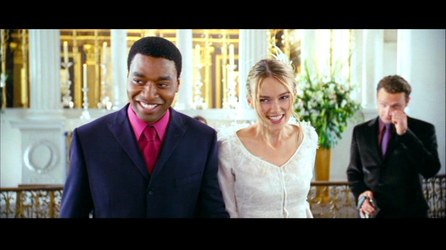
Peter and Juliet are newlyweds, as ecstatic as newlyweds should be, their wedding serving as one of the opening scenes tying many of the characters and their stories together.

Picture
There’s just one problem.
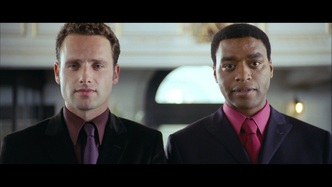
Picture
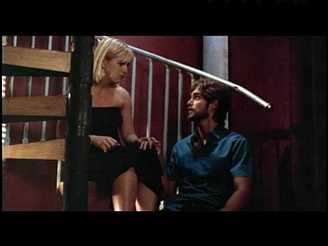
Yes, the best man is Rick, sans cowboy hat, hereafter known as Mark.
Mark is Peter’s best friend, and he does everything he can to give them a happy wedding, but he can’t quite convince anyone that he’s happy about it himself. One of the more sensitive guests even asks him out of nowhere if he’s in love with Peter, “just in case he wanted to talk about it and no one had ever asked.”

He responds honestly in the negative but turns down the opportunity to talk about what’s really making him miserable.

When Peter and Juliet get back from their honeymoon, Juliet goes to talk to Mark, to see if she can smooth over some of the frostiness he’s always had toward her, thinking Peter’s life will be easier if his wife and best friend can manage to get along.

Picture
Basically, it's the exact opposite of this.
Mark tries to brush her off in his usual forced politeness, but Juliet’s other reason for visiting, her quest for some video footage of her wedding that wasn’t ruined by the official videographer, compels her to play a tape she finds on his shelf labeled “Peter and Juliet’s Wedding.”

What she finds is a lovingly assembled montage of nothing but shots of her. It’s painfully romantic. And inescapably creepy. Rarely does anything so perfectly strike the balance between the two.

As Juliet struggles to process this and reconcile it with his usual aloofness, he explains, “It’s a self-preservation thing,” and walks out.

Picture
While he waits for her to leave, he has this freakout on the street to Dido’s “Here with Me,” silently debating whether or not to go back to talk to her, that still makes me tear up every time I watch it.

How does this one resolve?

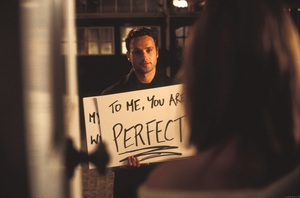
Mark comes over to Peter and Juliet’s on Christmas Eve, pretends to be a chorus of carol singers so he can speak to her privately at the door, and confesses his love via a series of poster boards. In his words, “without hope or agenda.”

Picture
Juliet kisses him, just once, before returning to Christmas with her husband, and as he walks away, Mark says to himself, “Enough. Enough now.”

That’s all there is to their story. No back and forth, no fighting, no debate. Just love, bubbling up in the most hopeless and inconvenient place. It’s painful and beautiful and sweet and sad. And then it’s time to move on.

Agree? Disagree? Comments are always welcome! Or keep up with my fictional musings by joining me on Facebook, on Twitter, or by signing up for email updates in the panel on the right!

4 Comments

Guest Post by Eric Bishop + Amazon Giftcard Giveaway!

8/18/2013

0 Comments

 
Picture
Today I'd like to welcome Eric Bishop, author of The Samaritan's Pistol, which will be released August 24th!
You can read my review here,
And order your copy here!
There's an Amazon giftcard giveaway at the bottom of this post, but first, Eric answers a question from me!

What are your least favorite literary tropes? Is there anything you've sworn you'd never do in a story, and does this show in The Samaritan's Pistol?

If romance was as difficult as popular fiction makes it seem, there would be no babies.

I was told in writing my novel that any romantic relationship had to persevere for at least half a book before the characters actually got busy. Some call romantic tension “writer’s gold,” a scarce commodity that you’d never squander.

Judging from book sales (more on Bella and Edward in a few paragraphs) the goldmine is real. Just watch The Bachelor (let’s call it fiction for the sake of argument.) By the end of the first few episodes, the bachelor or bachelorette’s selection is pretty much over. The show then uses smoke and mirrors in the form of rose ceremonies and drummed up drama to prolong the tension until a final moment that usually confirms what everyone knew months earlier.

Change the channel and it’s embedded in almost every series. Who hasn’t watched repetitive episodes, waiting for the couple to finally hold hands? It’s everywhere from Twilight to Richard Castle and Kate Beckett.

Prolonged romantic tension works, but if the best thing I can come up with to hold the readers’ attention is to torment them with the inevitable, I need to take an imagination pill. 

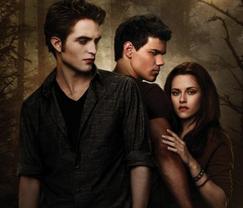
In an alternate literary universe, Bella could have been pregnant with a vampire baby by the end of the first chapter. How many scary places could this storyline have gone? Worries about the blood sucker eating its way out, Charlie finds out and shotguns Edward, Edward doesn’t die, Charlie now knows he’s to be the granddad of something he wants to shoot but can’t, and the baby won’t die anyway. How do vampire babies nurse in the first place? And how do you integrate a vampire child into kindergarten in the third book? Talk about special needs.

Some of the best tension I’ve read happens after two people get together.

My favorite example of a riveting story after a quick romance is when Cormac McCarthy sent John Grady Cole to Mexico in All the Pretty Horses. John Grady met Alejandra. They couldn’t resist each other; and John Grady consequently got thrown in a Mexican prison along with his best friend. I couldn’t put the book down.

I’ll never be as good as McCarthy, but I’ll follow his lead and find tension elsewhere. No way will I ever make the reader agonize endlessly over two indecisive characters.

In my novel, The Samaritan’s Pistol, the protagonist, Jim Cooper, is the typical loner. Raised as a non-Mormon in a predominantly Mormon community, Jim watched as all his friends, including his high school sweetheart, got married in their early twenties.

Jim finds romance in the form of Sheila Jensen midway through, and I refused to prolong the hookup because it wasn’t in character. Both Jim and Sheila were mature. They were attracted to each other and had the nudge of impending middle age as a catalyst.

It’s what people do in real life. We don’t want to be lonely.

I can offer lots of reasons to read The Samaritan’s Pistol. The action, adventure and literary overtones of the novel are things I talk about all the time.

Now I have one more. If you’ve ever been frustrated by two clueless characters who can’t make it work, you might enjoy the romantic story line in my novel. If your tension matches how much Jim and Sheila like each other, I will have struck writer’s gold. Thanks for reading.

Picture

About Eric Bishop

Eric Bishop is known to to his friends and family as an “author version of Clint Eastwood.” As the owner of a successful marketing firm, Bishop spends most of his time on his Utah ranch writing with the music of his adolescence bouncing off the walls. When he's not writing, Bishop enjoys spending time with his wife and four lovely daughters at his home in Nibley, Utah. Unlike Jim, Bishop hasn't had any run-ins with the Mafia. Yet.

You can find Eric Bishop on his blog, on Facebook, and on Twitter.

Picture

About The Samaritan's Pistol

Even among his small town neighbors, Jim is a content man. Despite the emotional baggage from his time serving in Desert Storm, he successfully runs a ranch, owns several beautiful horses, and makes extra cash as a wilderness guide for wealthy tourists. He's a modernday cowboy.

That is, until he runs into an ongoing mob-hit while riding in the mountains. Now, his most beloved horse is bleeding to death, three mobsters are dead from his smoking gun, and a wounded criminal is begging for his help. Jim has to make a decision. He can either high-tail it out of there, or accept a tempting offer made by the criminal—a promise of millions in stolen mafia cash for any help he gives.

Of course, only an idiot would turn down such an appealing offer when they’re marked for death anyway. Besides, Jim’s good nature cannot allow him to leave someone for dead, even a criminal.

Soon, Jim finds himself on a trip to retrieve a truckload of stolen money near the Las Vegas strip, right under the Mafia’s nose. But even if they escape with the cash, will Jim’s conservative neighbors provide sanctuary for their local Samaritan, and how far will the mafia go for revenge?
a Rafflecopter giveaway
0 Comments

Fi's Five Favorite Love Triangles #3: Sawyer/Kate/Juliet (Lost)

8/14/2013

4 Comments

 
Picture
(Click the links to read Triangle #5, Triangle #4, and my defense of love triangles in general)

First, no analysis of any element of Lost can be responsibly handled without a giant one of these:

****SPOILER ALERT!****

Ah, much better.

Next, it must be acknowledged that this isn’t one of those tidy stories that focus on about three main characters. Lost is an ensemble series, so this isn’t the most insular of triangles. In the third season, it intercepts the original, first season Kate/Jack/Sawyer triangle and spends some time as a love parallelogram, with Jack getting involved with both women as well, and all four of them have other love interests of varying levels of seriousness over the course of the series.

I’m going to go ahead and call it a triangle, though, on the grounds that it involves two characters who are both in love with a third who has feelings for them both, for an extended period of time, to an extent that overshadows all those characters’ other connections. Sound right?

Picture
Sorry, Jack. Please don’t hit me.
Let’s start with the apex of the triangle.
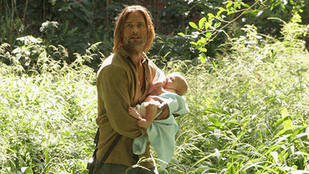
Picture
Oh my, so many pretty pictures from which to choose.
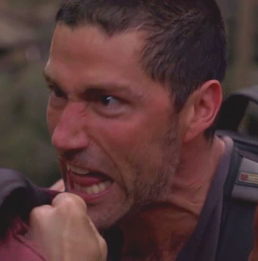
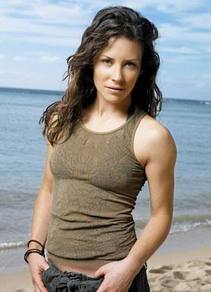
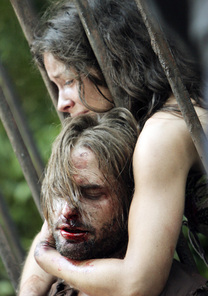
Sawyer starts out the series as the bad boy corner of Kate’s more traditional (and less compelling) triangle. As the series goes on, and Jack spends most of his time worrying about either being a leader or being batshit crazy…
Picture
There’s a scary abundance of good shots of this too.
…while Sawyer comes out of his near-villain shell to reveal himself as an antihero and then flat out hero, it becomes pretty obvious who the real catch is.
Picture
Pictured: No-brainer.
Ordinarily, that would mean that he gets the girl, or that he tragically loses the girl, or that Lost dropped the ball and made us root for the wrong team by accident. But this is Lost we’re talking about, a very adaptable show with a knack for choosing option D. It also happens to have no problem coming up with diverse, well-developed, interesting female characters. So instead of six seasons of waiting for Kate give her very easy answer, we get a new question. Not “Who gets Kate?” but “Who gets Sawyer?”

You already know who’s first in line.

Picture
Kate starts out as the generic triangle girl. You know the kind. Sweet, pretty, bland, beloved by default, trying to be tougher than she is. Bases her every action on what one guy or the other tells her, or the exact opposite if she’s feeling contrary. Cries at the drop of a hat. There’s a reason (other than Jack) why she couldn’t carry a triangle and make it the best of the series.

She’s the original, though, the first connection we see Sawyer make, the one who’s with him through his evolution from one of the most detestable to one of the most trustworthy people on the island. Whatever Kate’s general shortcomings, there’s no denying the chemistry between these two.

Picture
Kate grows too, when her main purpose isn’t to act as a middle corner, and it’s easy to get used to thinking of Kate and Sawyer as meant-to-be.

Now Juliet.

Picture
I’m not even going to try to come up with labels for Kate and Juliet along the lines of the good boy and the bad boy. No set of opposites perfectly fits them, but suffice it to say, they’re about as distinct as two heroines can be. Juliet doesn’t appear until season three, already a strike against her team, and when she does, it’s as one of the Others, the main villains since season one.

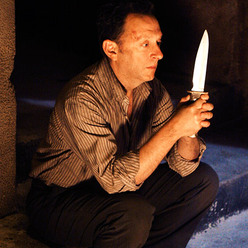
That’s how special Juliet is, though, enough that all of that quickly stops mattering. She’s strong enough to be a villain, but she’s not, and that strength covers heartbreaking vulnerability. She’s a fertility doctor who was lured to the island by the Others with the promise of participating in groundbreaking research. Since then, she’s been prevented from leaving or even forming close on-island relationships by Ben, their leader, thanks to his unrequited obsession with her.

Picture
I’d be scared to cross this guy too.
She’s more or less resigned herself to never being happy, until some of the survivors escape, the island gets plunged through space and time, she and Sawyer find themselves left behind in the same time period, hopelessly separated from both Kate and Ben (among others), and they have three years to build a life together before the escapees come looking for them.

So how does this one get resolved?

As is only possible on a show like Lost, both ways.

When the escapees do come to rescue the group including Sawyer and Juliet, Sawyer doesn’t want to be saved, but Juliet can’t shake the programming that tells her that her happiness is impossible, and she sees Kate’s return as the end of the illusion. She conspires with Jack to change time so the crash that brought most of the characters to the island will never happen, by setting off a nuclear bomb, believing that if Sawyer never comes to the island, he’ll be happy, and if she never meets him, she’ll never have to lose him.

Trust me, it makes sense on Lost.

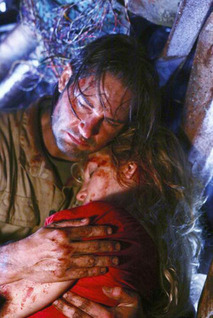
This results in Juliet having TWO of the most heart-ripping death scenes you’ll ever see, one in the season five finale, when she falls down a well with the bomb and ends up lying at the bottom, hitting it with a rock, begging it to go off, and then another in the season six premier, when it’s revealed that the next time jump separated her from the bomb just as she detonated it, before it could kill her, and Sawyer digs her out of the demolished well just in time to watch her die.

Picture
The plan to change time doesn’t work, and the main timeline leaves Sawyer and Kate with the rest of their lives to mend their rift, with Juliet and Jack both dead in the last battles of the island.

This is Lost, though, and things aren’t that simple. The final season also includes what turns out to be an afterlife timeline that I’m sure most of the people reading this are waiting for me to rip into with a hacksaw, but I’m not going to. The afterlife plot is neither the best nor the worst way to end a great long story, and it’s not the point of this post. It only requires mentioning because it’s where Sawyer and Juliet find each other again, and after his implied lifetime with Kate, Sawyer spends eternity with Juliet.

It’s a have-your-cake-and-eat-it-too ending, but I love it anyway, because it explores the way people heal and grow and adapt to multiple possible ways of living their lives, but unlike so many triangles that play with this, the second love isn’t second-best. Juliet is Sawyer’s soul mate, even though it took being separated from Kate for him to find that out.

Oh, and the fact that the smart, less elvish-looking blonde gets the guy?

Picture
This guy.
That might have something to do with it.

Agree? Disagree? Comments are always welcome! Or join me on Facebook or Twitter for more fictional musings!

4 Comments

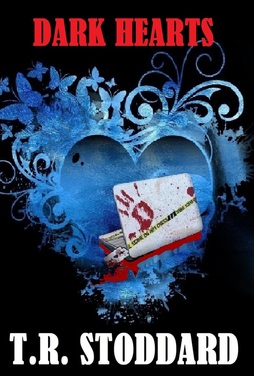
Book Review: Dark Hearts

8/10/2013

0 Comments

 
Picture
Book Review:

Dark Hearts

By T.R. Stoddard

Amazon Digital Services, 2013

A-

(Click here to order)
Note: Review based on free copy provided by author.
The Basics:

There is an appropriately named chatroom where depressed, troubled, and generally dark hearts can gather. Some come for company and support, others for cheap attention. Then there are those with far more sinister reasons.

The Downside:

There are a few emotional shifts and decisions that are abruptly announced and underexplored, told rather than shown. It’s a short book, even with a few over-long filler chats about books and art. There’d be plenty of room to build up the characters' changes of heart more deeply, but it isn’t used.

The Upside:


This one's difficult to discuss without spoilers. What time we do spend fully immersed in the characters’ minds, rather than observing plot developments from afar, is very effective and vivid, especially in the case of Kara, who owns the better half of the text. She lives in the uncannily well-rendered world of a depressed, lonely teenager surrounded only by cyber connections to equally confused, desperate people. The effect is deeply uncomfortable, of course, but that’s as it should be.

As neurotic and self-absorbed as Kara is, it’s hard to look away from her as it slowly becomes clear that she’s one of the hearts in the chatroom who could be fixed, given the right person to trust, while it remains firmly unclear whether any of the other people in her world actually want that for her.


The atmosphere of uncertainty is maintained as people’s motives start to surface and the gray matter starts hitting the fan. The darkest heart in the chatroom is quick to make it inescapably clear than no one is safe, making the word “Thriller” fit Dark Hearts more aptly than many books that are branded with it. It's a twisting thrill ride of a read.

0 Comments

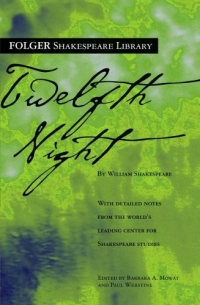
Fi's Five Favorite Fictional Love Triangles #4: Viola/Orsino/Olivia (Twelfth Night)

8/6/2013

0 Comments

 
Picture
(You can read the #5 entry here and my defense of love triangles in general here.)

More Shakespeare! ’Tis the season, after all. Well, not really, in the case of Twelfth Night, since the title refers to the twelfth night of Christmas, in spite of the fact that the plot has nothing to do with Christmas whatsoever.

A fun fact not often mentioned at summer Shakespeare festivals!

Anyway, we’re jumping from the most traditional triangle on the list in the #5 spot to the most unconventional at #4. This one’s less a love triangle than a love recyclables symbol.

Picture
It's mostly triangular
If you haven’t seen or read it, here’s how it goes:

Viola gets separated from her twin brother, Sebastian, in a shipwreck that leaves her stranded in Illyria, a place she knows nothing about. This being a dangerous and inconvenient time to be an unescorted woman, she disguises herself as a man, the way all the coolest Shakespearean women do, puts on her best impression of her brother, and gets herself a job running errands for a local Duke.

Seems like a perfect way to take care of herself in a strange place until she can figure out her next move. Except that Duke Orsino turns out to be hot.

Picture
Sure, I could have found a pic from a legitimate production of Twelfth Night, but this was easier and more fun.

Now she has to decide if and when it might be worth the risk to tell him the truth. To make matters more uncomfortable, those “errands” she signed up for turn out to include wooing the lady Olivia on behalf of Orsino, who can be excused for never having read Cyrano de Bergerac on the grounds that it wouldn’t be written for nearly another three hundred years.
Picture
Poor guy.
Viola goes on the errands, being as big a bitch to Olivia along the way as she can possibly get away with, at first for the obvious reason that Orsino’s pining makes her jealous and protective, but then because she genuinely feels bad for Olivia when she realizes where this is going and wants to spare her some fruitless pining of her own.

Unfortunately, Olivia’s a sucker for the bad boy. She falls harder for Viola’s new male persona the more Viola tries to stop her.

So Viola loves Orsino loves Olivia loves Viola.

Picture
Got it?

Soak in those comic romantic misunderstandings. Enjoy them. The rest of this list was selected for being rip-your-heart-out painful, as most well-executed fictional love triangles must necessarily be in order to do justice to the human realities they’re drawn from.

****Spoiler Alert****


This one’s a comedy, where all will be well. Our heroine gets the guy, and Olivia is not forgotten. Remember that twin brother Viola copied her appearance and mannerisms from? The two of them hit it off nicely when he washes ashore and comes looking for his sister.


****End Spoilers****


So why is Twelfth Night on this list? Because as useful as stories are for brutally mirroring the hardest parts of the human experience, sometimes we need one to help us laugh at a good, silly caricature of our problems. Love belongs in farces as much as tearjerkers.

This is also one of those rare love triangles involving two women who aren’t interchangeable, neither of whom is evil. Those certainly deserve credit wherever they come up.

And the fact that it involves a guy who starts out wrapped up in a shallow, aesthetic, abstract idea of love coming to appreciate the cool, practical girl waiting under his nose, oh, and that it was written in 1602…

Picture
Have I mentioned in the last five minutes how much I love this guy?
Yeah, that qualifies as favorite material.

Agree? Disagree? Comments are always welcome! Or join me on Facebook and Twitter for more fictional musings!

0 Comments

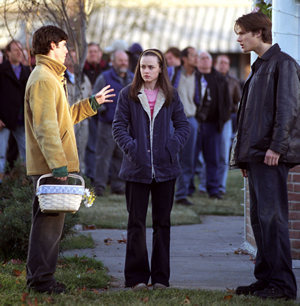
Fi's Five Favorite Fictional Love Triangles #5: Rory/Dean/Jess (Gilmore Girls)

8/3/2013

1 Comment

 
Picture
August's countdown is going to be devoted to my favorite fictional love triangles. If you missed my post at the start of the month about what could possibly possess me to spend a month celebrating such a reviled trope, you can read it here.

Now, on to Gilmore Girls!


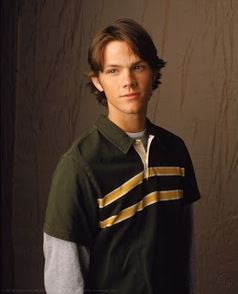
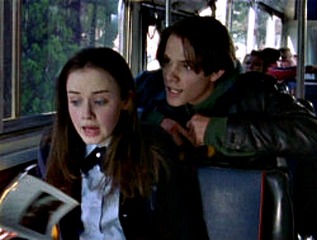
Structurally, this triangle’s about as classic as they come, your standard Girl/Good boy/Bad boy setup. I have a soft spot for it because it was the first one like it that I connected with as a girl, but to this day I think it’s one of the best handled of its kind.

The exceptionally written dialogue of Gilmore Girls certainly helps a lot. Admittedly, it often causes me to overlook the show’s flaws, but in this case, it adds a lot to Rory as a character, a lot that’s often missing from characters acting as the apex of a love triangle.

Picture
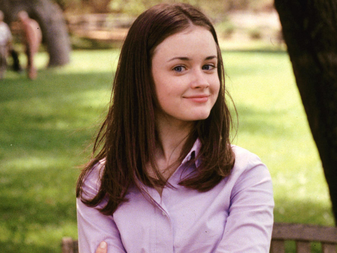
Being on a show that prides itself on being smartly written, Rory is smart, obviously, evidently smart, not just indicated to the audience to be smart via a lazy sprinkling of well-known literary classics on the shelves of her room.

She’s sharp, funny, and all-around cool enough to make it uncommonly understandable what both boys see in her. And as exceptional as she is, she’s still a believably confused and inexperienced teenage girl, making it also uncommonly understandable how long she allows this unfair, uncomfortable situation to drag out.

Okay, okay, enough about Rory. We all know what people watch this kind of love triangle to see. We’ll start with the good boy, Dean.

Picture
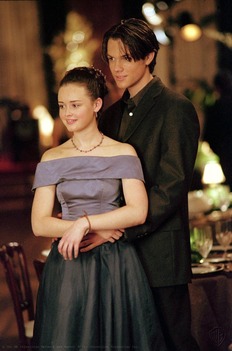
He’s the good boy, alright, no arguing with that. Not to be confused with the boring contingency boy. He’s the sweet, attentive gentleman every never-been-kissed girl imagines for herself. Early in their courtship, there’s an episode in which Rory brings him to a dance at her private school, and a couple of the resident mean girls start hitting on him in front of her.

Even though their relationship is still in the fairly formal, nonphysical phase, Dean responds very clearly by wrapping his arms affectionately around Rory during the girls’ questioning.

Picture
Watching that episode for the first time as an eleven-year-old girl, I remember my dad telling me, “If you ever meet a sixteen-year-old boy with enough sense and empathy to do that, hang onto him and don’t let go.” Someday I might find myself telling my future daughter(s) the same thing.

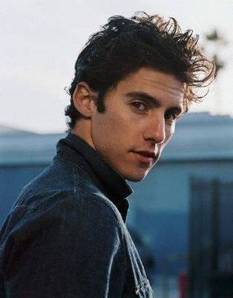
How could anyone compete with that? Meet the bad boy, Jess.

Picture
And he is a bad boy, with all the associated ups and downs. He’s no misunderstood hero in scoundrel’s clothing, no noble, responsible potential partner who just happens to have a more confrontational, dickish brand of surface charm than the norm.

Sure, he’s got that charm, and he’s genuinely, passionately in love with Rory, but he’s also unreliable, forever wrapped up in his own problems. He gets into fights without provocation, alienates Rory’s friends and family without a thought, and generally acts almost entirely on id-driven impulse.

Easy choice, right? Jess is the guy you lust after on TV, Dean’s the one you want to marry. Except…

Picture
Remember the bit about Rory being truly, clearly intelligent? Well, unlike so many good boys from less well-written triangles, Dean isn’t just the boring boy to be outshone by Jess’s charisma, but he’s also not perfect.

Dean recognizes Rory’s intelligence and potential and tries his best to respect it, but he can’t relate to it. The best he can do is display angelic patience while she pours over college prep material and spends recreational hours browsing the bookstore. He can’t talk to her on her level about most of what she does.

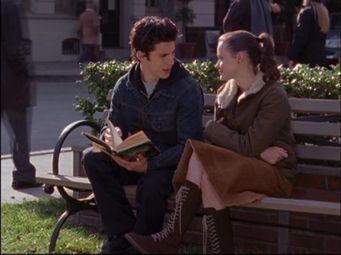
Guess what? Jess can.

As hard as Dean tries not to, at his lowest moments, he resents Rory’s ambition. It’s a problem she thinks she can overlook, until she gets a glimpse of what it’s like to be understood.


Picture
****Spoiler Alert****

In the end, it’s a deal breaker. Not that that cancels out all of Jess’s problems. It doesn’t.

So who does Rory end up with?

Neither of them. The deep flaws that make the triangle so balanced and intense also make both relationships impossible. After all, if either of them had been the one, it would have been a lot harder to believe that the other one had a chance.

****End Spoilers****

Agree? Disagree? Comments are always welcome! Or join me on Facebook or Twitter for more fictional musings!

1 Comment

    Get updates & coupouns from
    Fiona J.R. Titchenell:

    Subscribe

    * indicates required
    Interests

    Search This Blog:

    Support Fiona J.R. Titchenell and get exclusive content:

    Picture

    Find
    ​Fiona J.R. Titchenell:

    Picture
    Picture
    Picture
    Picture
    Picture
    Picture

    Archives

    November 2022
    October 2022
    December 2021
    October 2021
    September 2021
    March 2021
    October 2020
    September 2020
    August 2020
    July 2020
    June 2020
    April 2020
    March 2020
    December 2019
    October 2019
    September 2019
    August 2019
    July 2019
    June 2019
    May 2019
    March 2019
    February 2019
    January 2019
    December 2018
    November 2018
    September 2018
    August 2018
    July 2018
    June 2018
    May 2018
    April 2018
    March 2018
    February 2018
    January 2018
    October 2017
    September 2017
    August 2017
    July 2017
    June 2017
    May 2017
    April 2017
    March 2017
    February 2017
    January 2017
    November 2016
    October 2016
    September 2016
    August 2016
    July 2016
    June 2016
    May 2016
    April 2016
    March 2016
    February 2016
    January 2016
    December 2015
    November 2015
    October 2015
    September 2015
    August 2015
    July 2015
    June 2015
    May 2015
    April 2015
    March 2015
    February 2015
    January 2015
    December 2014
    November 2014
    October 2014
    September 2014
    August 2014
    July 2014
    June 2014
    May 2014
    April 2014
    March 2014
    February 2014
    January 2014
    December 2013
    November 2013
    October 2013
    September 2013
    August 2013
    July 2013
    June 2013
    May 2013
    April 2013
    March 2013
    February 2013
    January 2013

    Categories

    All
    Aliens
    Announcement
    Blog
    Books
    Children's
    Comics
    Confessions
    Contemporary
    Couples
    Crafts
    Crushes
    Dragons
    Dystopian
    Fantasy
    Free Fiction
    Games
    Gender Issues
    Guest Posts
    Guests
    Guilty Pleasures
    Hero/Villain Pairs
    Historical
    Holidays
    Horror
    Humor
    Hunger Games
    Hunger Games
    Lists
    Literary Rants
    Lost
    Love
    Love Triangles
    Metafiction
    Movies
    Music
    Musicals
    Na
    Nonfiction
    Parents
    Reviews
    Romance
    Romantic Gestures
    Sci Fi
    Sci Fi
    Shakespeare
    Short Stories
    Steampunk
    Theater
    Tragedy
    Tv
    Twists
    Vampires
    Witches
    Writing
    Ya
    Zombies

Powered by Create your own unique website with customizable templates.